A Japanese ATM holds your card inside the machine for the entire transaction and returns it before it ever releases the cash, so the two American reflexes that feel most automatic at an ATM — pocketing the card early and grabbing the money the moment it appears — are the same two moves that cancel withdrawals and leave cards behind in the slot. The machine isn't being fussy. It's running a fixed order of events, and nearly every wrong action an American commits at it comes from being one beat ahead of that order.
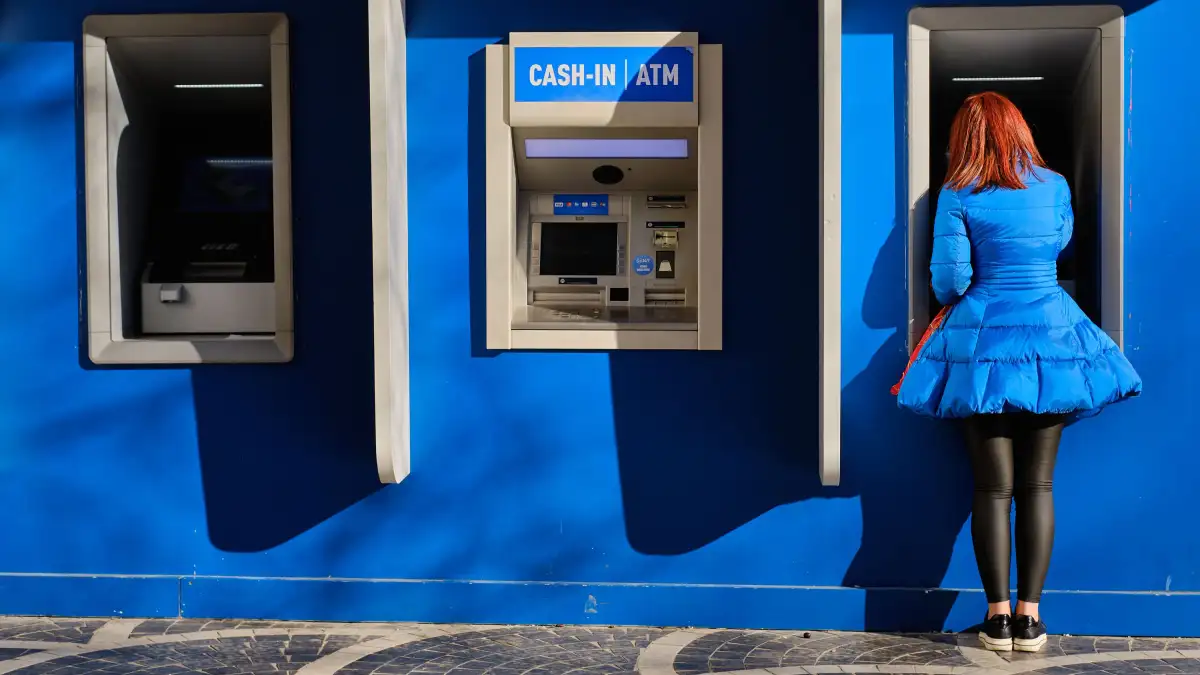
Stand at the machine with me for a minute, because this only sticks if you feel the pauses.
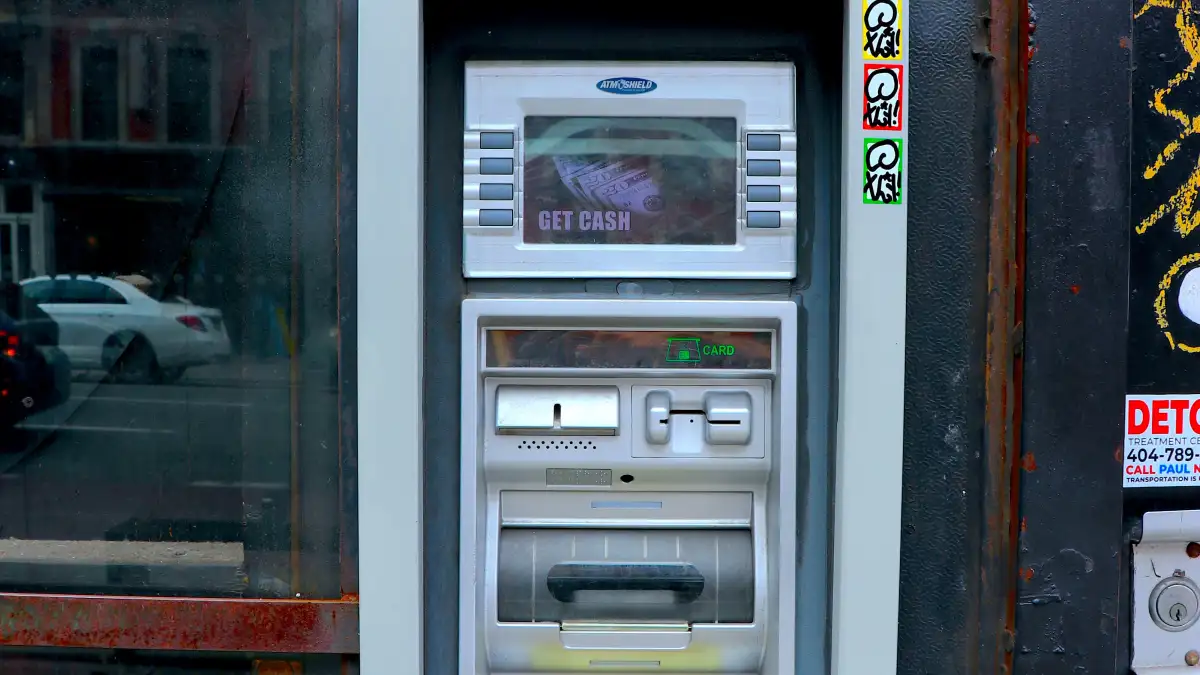
You push the card in. The motor takes it, the flap shuts, and your hand comes back empty. Everything in you wants to wait right there, hand hovering, until the card reappears so you can hold it while you work. That's the rhythm you brought with you. At home, either the card never leaves your hand, or it comes right back and you keep it in your fist through the whole thing. Here it isn't yours again until the end. The machine is waiting for you to stop watching the card slot and look up at the screen. Nothing is going to happen at that slot for a while.
The screen asks for one thing before anything else
You look up and the first decision is a language. The English option is normally grouped near the top of the list, so you don't have to hunt through flags or country names — pick it and move on. This is the machine being considerate, not testing you.
Then it wants the PIN, and that's where the second reflex bites.
Your thumb knows the wrong keypad
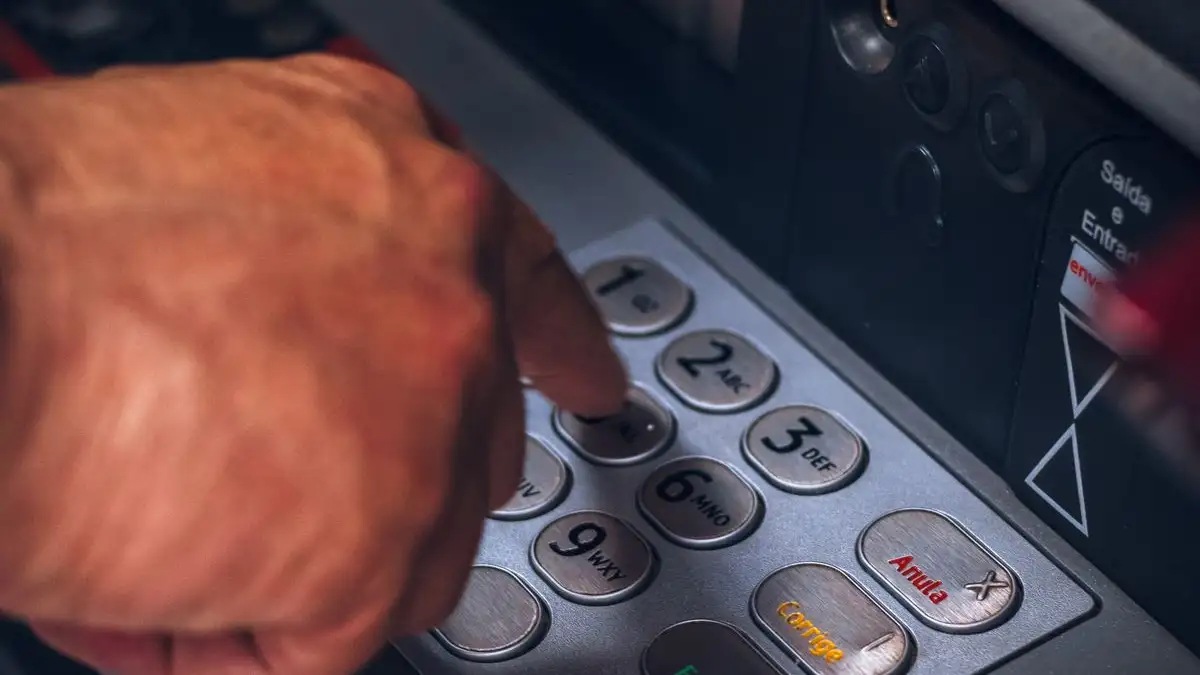
On many Japanese machines the digits aren't laid out the way a U.S. phone is. You'll sometimes meet the calculator arrangement instead, with 7-8-9 across the top row. If you punch on muscle memory, you'll hit the digit next to the one you meant. And a wrong digit usually doesn't come with a working backspace — you clear and re-enter, or the machine walks you back to the start of the transaction. Either way, a careless finger costs you a full restart rather than one correction.
So slow down. Enter it the way you'd key a code into an unfamiliar alarm panel: deliberate, one press at a time, eyes on the pad. Speed buys you nothing here and costs you the whole transaction.
Cancel is a reset, not a dead end
Here's the habit that changes everything else. A dedicated cancel control sits on nearly every screen, and pressing it returns your card immediately. On a U.S. machine, cancel is often a trap — you're not sure what it aborts, whether you lose your place, whether it just spits the card back and locks something. So you avoid it and try to guess your way forward.
Do the opposite. If you land on a screen you don't recognize, or you realize you answered something wrong, press cancel. The card comes back, and you start again with the machine in a clean state. Getting the card back is the whole point; the transaction can be redone in thirty seconds. A wrong turn here is not a stuck transaction. It's a do-over.
Confirm, correct, and the clock you can't see
The routine screens want a confirm or a correct, and those presses have to happen in the order the machine asks for them, not the order you'd assume from the layout. Read the button you're about to press, not the one you expect to be there.
And if you freeze — genuinely stuck, hand off the machine entirely — the screen will time out on its own and hand your card back. That's worth knowing, because the fear in that moment is that you've broken something or trapped your card. You haven't. The failure mode isn't "stuck forever." It's "you stood there longer than you needed to."
The order things come back in
Now the part that actually strands cards, and it's the one your hands get wrong every time.
When the transaction finishes, the machine gives things back in a fixed order. The card comes out first. Then the cash. Then the receipt, depending on the machine and what you chose. Three separate moments, three separate slots, and your body is trained to sweep them all at once on the way out the door.
The card arrives when you're least braced for it — in the middle of things, before the money, while you're still reading the screen. If your eyes aren't on the card slot at that second, the whirr of the cash a beat later pulls them to the wrong place. You take the money. You take the receipt. You walk. The card is still sitting in its slot, and you don't notice until you're at the door or already through it.
So the rule I use isn't "take the card before the cash." It's narrower than that: nothing else exists until the card is in my hand. The cash, the receipt, the screen — none of it gets my attention until the card slot is empty and the card is back in my pocket. Build that one habit and every other mistake on this list stays recoverable.
The receipt is the only proof you have
Last thing, and it's easy to wave off when you're in a hurry. Depending on the machine, the receipt is either printed automatically or offered to you. Take it.
Until the withdrawal actually posts to your account — which can take longer than you'd like — that slip of paper is the only record you have that the money left your account at all. A completed withdrawal and a canceled one can look identical from your side of the screen in the moment, and you won't know which one you got until later. The receipt is how you tell them apart while it still matters.
None of this is about the ATM being foreign. It's about a machine that has a sequence, and a person who arrives carrying a different one. The cards that get left behind aren't left by people who were confused. They're left by people who were quick.
Match the machine's clock and it stops being a puzzle. The card goes in and stays in. The screens run in order. The card comes back before the money. Everything else is just reading.