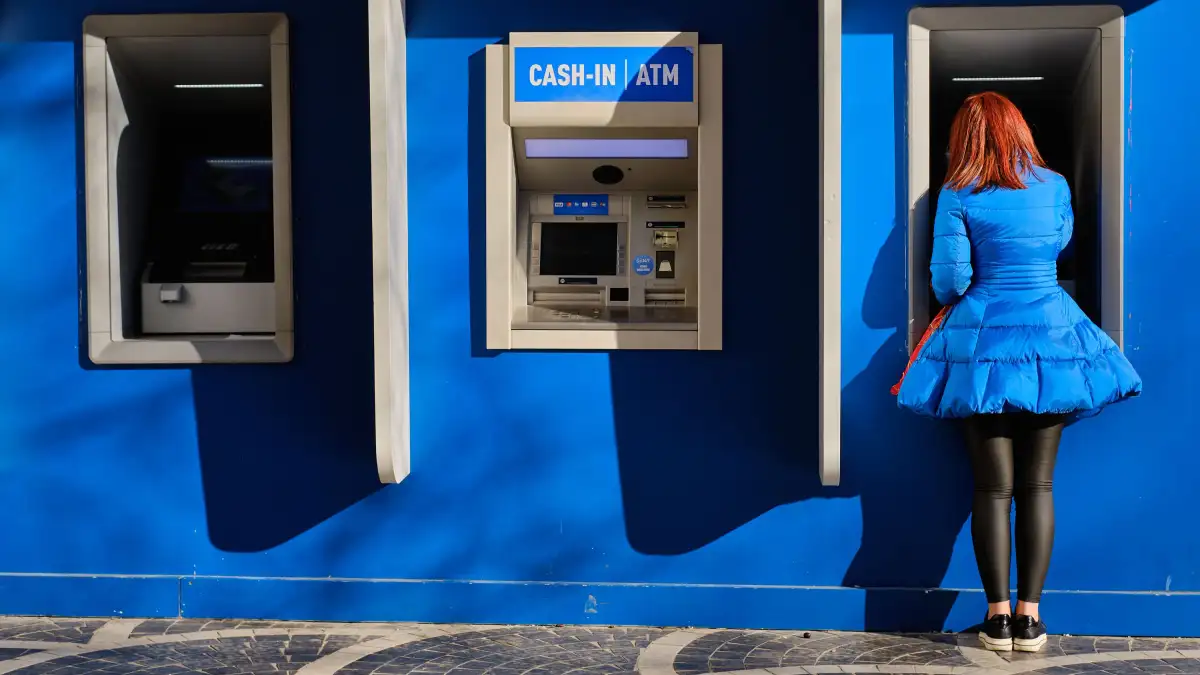
The 7-Eleven ATM in Japan works with a U.S. card because the machine was built by a bank that expected foreign cards. Seven Bank operates it, the language selection comes before the card goes in, and the withdrawal is authorized by PIN instead of signature — three decisions that exist specifically for accounts held somewhere else. That design, not the store's location or its hours, is why this machine became the default cash point in Japan for cards issued outside the country.
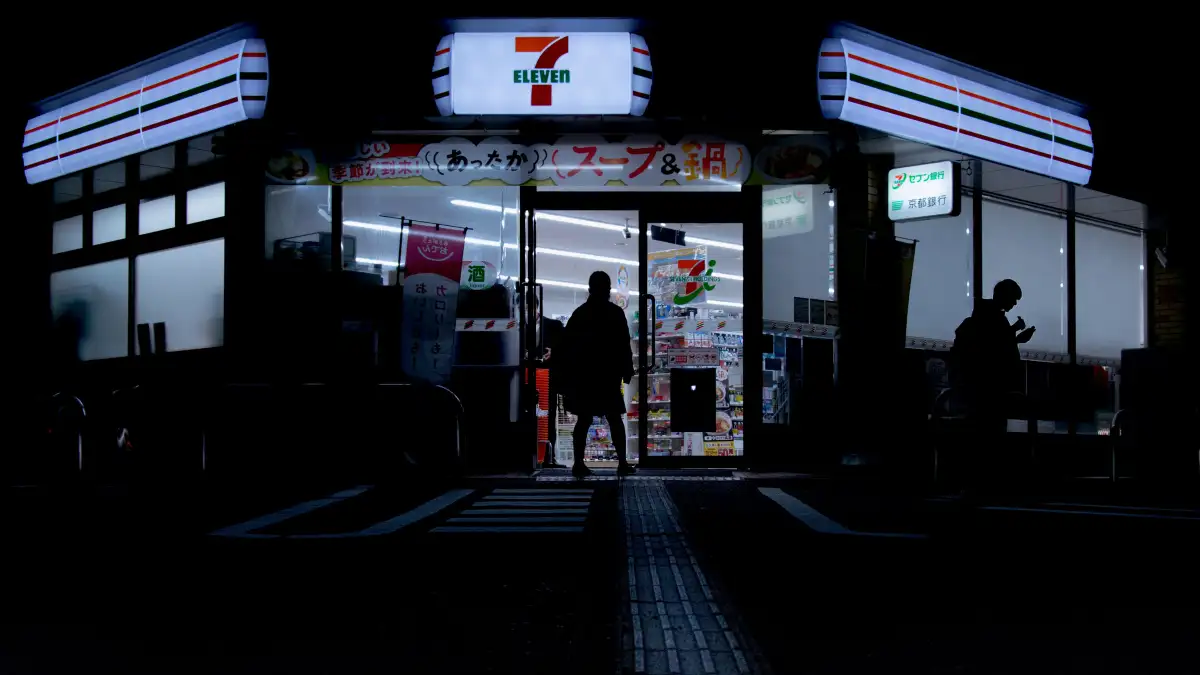
A bank branch folded into a corner
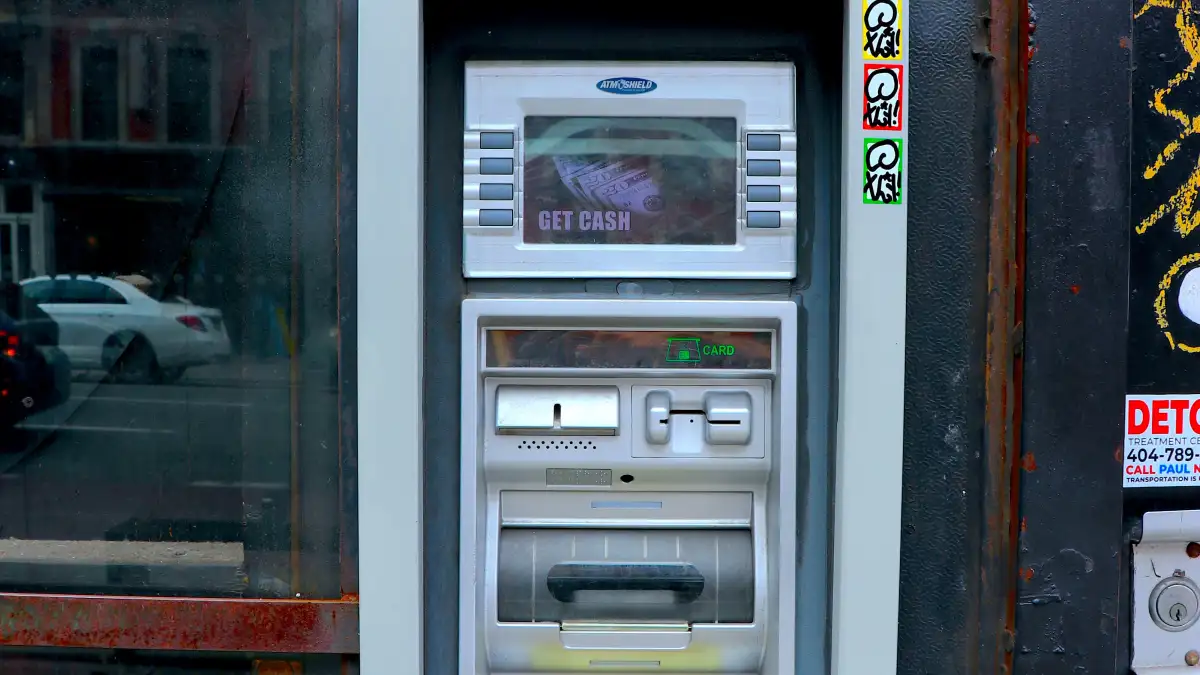
I stopped seeing these machines as store furniture a long time ago. Look at what is actually standing there and it reads as a branch office compressed into a square meter next to the magazine rack: its own screen, its own receipt printer, its own cash drawers, its own rulebook, and a bank behind it that treats international cards as ordinary customers rather than exceptions to be tolerated.
You can see that decision before you touch anything.
The screen asks you a question first
Walk up and the machine wants to know your language. English sits on the first menu, not buried under three layers of Japanese-only prompts. You press it.
U.S. ATMs run the sequence the other way — card first, language second, if there is a language option at all. In Japan the order is deliberate. It exists so that a person who reads no Japanese gets a usable screen before committing anything into the slot. Reverse it and you would be standing there with your card inside a machine whose menus you cannot read, which is exactly the failure the order was designed to prevent.
That one choice is the whole machine in miniature. Every step after it repeats the same idea: assume the person in front of it is not from here, and do not make them guess.
Then the slot swallows the card.
The card stays inside until the end
Your card goes in and does not come back immediately. It stays in the machine for the entire transaction while the machine reads the chip or the stripe and runs an authorization. For anyone raised on U.S. ATMs, where you hold the card the whole time and pull it out at the end, this is the strangest half minute of the process.
It makes sense once you see what the machine is doing. It is not holding your card as a convenience. It is holding it the way a counter clerk holds a ticket while fetching something from the back — the physical object is the token for the transaction, and it stays with the machine until the transaction is finished.
What it asks for next splits your wallet in two.
The PIN is the actual gate
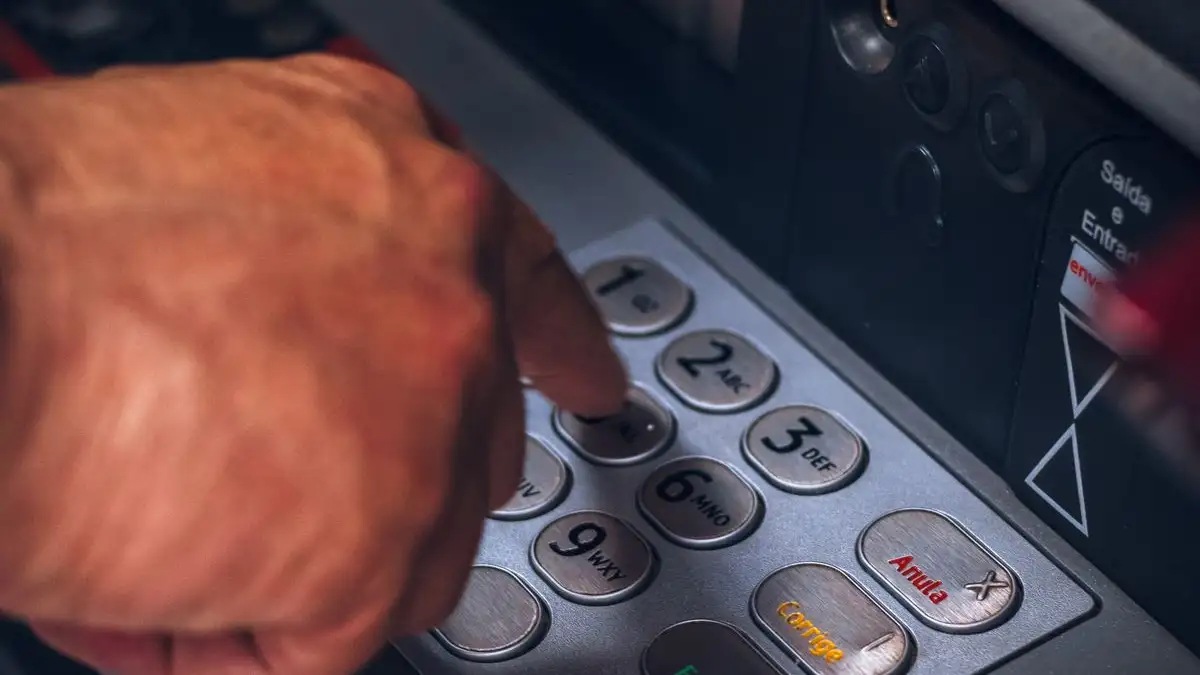
Every withdrawal here goes through a PIN. No signature, no ZIP code, no fallback. A four-digit number or nothing.
That requirement is why debit cards are the easy case and credit cards are the awkward one. A U.S. debit card already carries a PIN tied to the account, so the machine has a credential it can authorize against. Most U.S. credit cards do not have one at all — domestically they are signature transactions, or nothing. Some issuers will set a cash-advance PIN if you call and ask; until one exists, the card may be unable to complete a withdrawal no matter how many network logos are printed on the back.
I have watched people discover this at the machine, holding a card that works everywhere at home. It is not a broken machine and it is not a bad card. It is a credential mismatch.
The back of the card decides more than the front
This is the part that surprises people most, and it is the part I would tell anyone to check before they fly.
The machine does not care which bank's name is on the front of your card. It cares about the payment network printed on the back — the mark that places your card inside a system the machine is connected to. Two cards from the same bank, issued to the same person, can behave completely differently here if one carries a network the ATM is wired for and the other does not.
So the useful question is not whether your bank works in Japan. It is which network is on the back of this specific card. That is a two-second check at home and a very long walk to nowhere if you skip it.
Amounts come from buttons, and the bills come out large
You do not type an amount. You choose one. The screen offers preset figures in yen, and you tap the one you want with the same finger you used for the language menu.
Then the cash drawer opens and hands you large notes. The machine deals in high-denomination bills rather than a spread of small ones, and that is a stocking decision as much as anything: a machine that refills with big notes holds more value in less space and needs fewer restocks.
The consequence is practical. You walk out with a thin stack of large bills, and plenty of small counters, ticket machines, and older shops would rather not break one at a busy moment. The machine itself will take those notes back and break them, which makes it about the most dependable bill-breaker you will find, but if the day ahead involves a lot of small purchases, that is worth knowing before you pick the amount.
The card comes back before the money
Here is the detail that tells you how carefully this thing was designed.
The card is returned first. Then the cash comes out.
In most U.S. ATMs the order is reversed: the bills appear, you take them, and the card follows. On this machine you get the card back and then hear the shutter open on the cash. The reasoning behind it is not hard to reconstruct. You cannot be standing there counting bills while your card is still captive inside the machine, and you cannot drift away mid-transaction with the machine holding your card after it has already handed over money. The card is the thing you need most and the thing you would panic about losing. It comes back first so your hands are free and your pockets are settled before currency enters the picture.
If the card takes a moment, that is the machine talking to your bank, not a malfunction. Wait for it.
The receipt is the only record you get today
The machine prints a slip. It shows the yen amount, the date, the machine's location, and a reference number.
What it does not show is what left your account in dollars. That number does not exist yet. The withdrawal posts later, and the amount that lands on your statement is determined by your own bank and the network on the back of your card, not by anything the machine did.
I treat that slip as the real artifact of the transaction, because it is the only record that exists in your hands at the moment it happens. Photograph it or put it in a fixed pocket. Pulling it out later means reconstructing a withdrawal from a statement line with no context, which is a lot harder than it sounds once several of them are sitting next to each other.
Where it still fails
A machine built for foreign cards is not a machine that always succeeds.
An issuer's fraud system can decline a transaction the ATM is perfectly happy to process: a card that has never been used abroad, a spending pattern that looks odd to an automated model, a cap the issuer applies on its own side. None of that is visible at the machine, and none of it can be fixed by pressing the screen harder.
There are also other places in Japan that take foreign cards, including Japan Post's machines and some bank-operated ATMs in larger stations and airports. They are worth knowing as second options. The reason this particular machine matters is not that it is the only one — it is that it was designed from the beginning around the assumption that the person standing in front of it is not carrying a Japanese card, and you can feel that assumption in every screen.