Yes — the locker banks inside Tokyo Station take IC cards. Suica, Pasmo, and the other major cards read on the newer banks, and on plenty of older banks where a reader has been bolted onto the payment panel. The detail that matters more than the tap: the fee comes off the card when you close and lock the door, not when you come back for the bag. So the real decision happens before your suitcase goes in, and the thing to check first is your balance, not your pocket for coins.
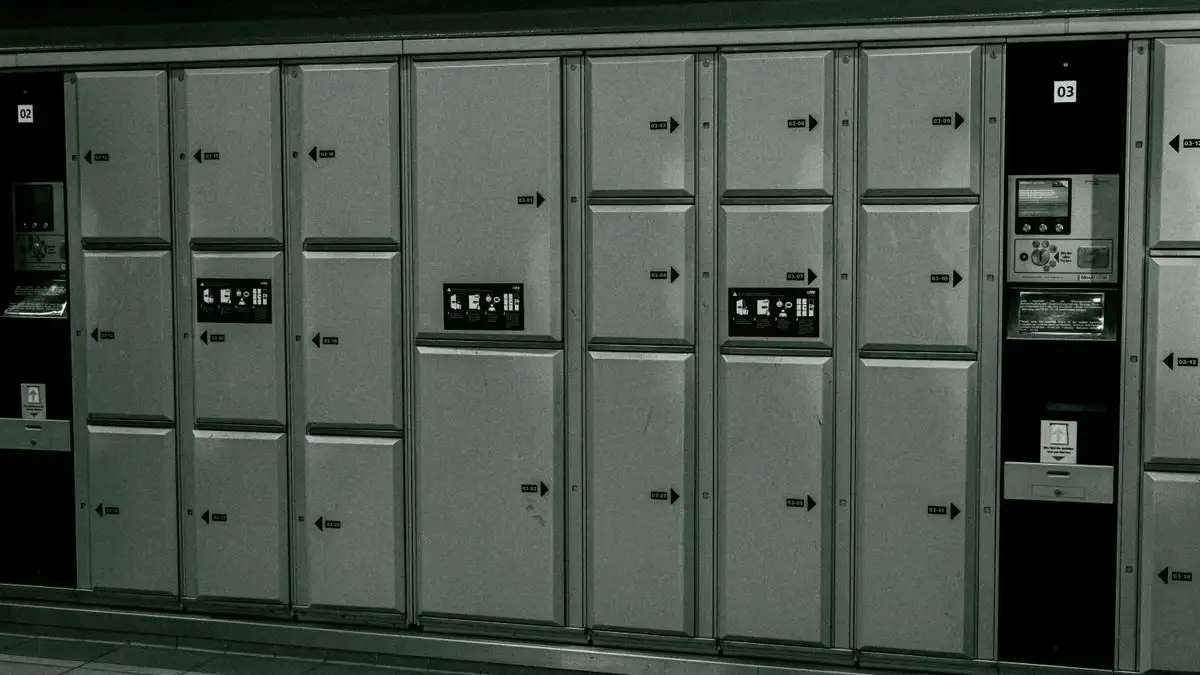
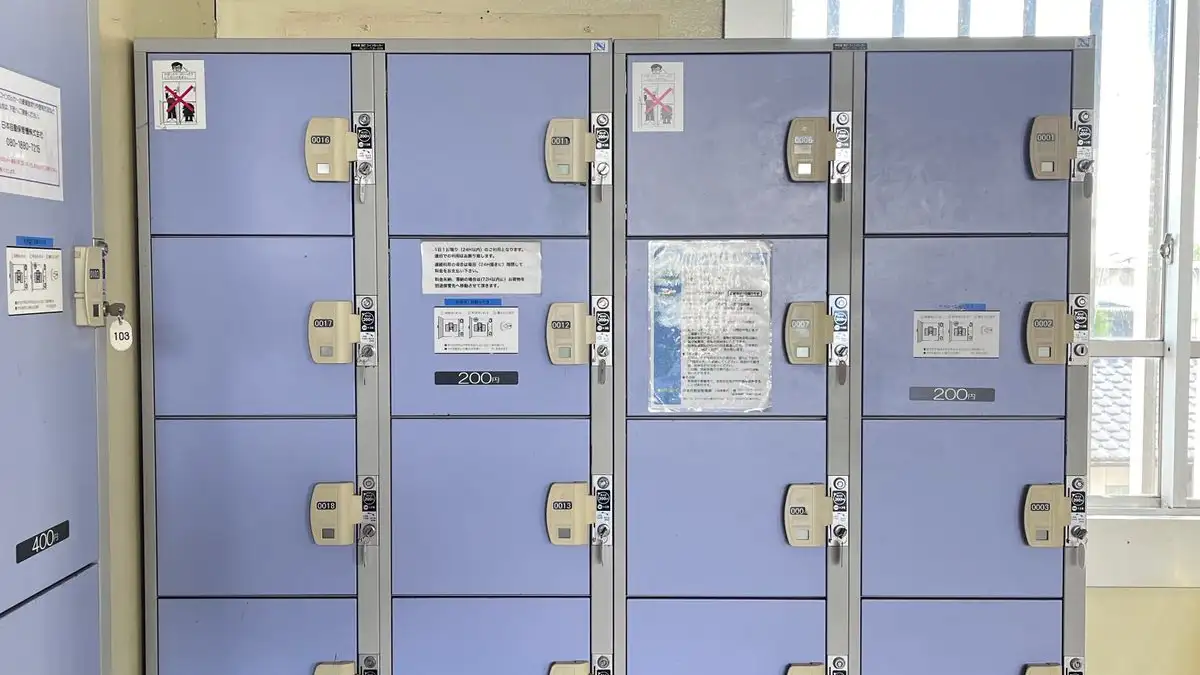
Stand in front of a bank with me for a minute. Suitcase handle in your right hand. Train in forty minutes. A row of grey doors, each with the same small panel: coin slot, keyhole, and on some of them a flat pad with a green light above it. You have a card in your wallet, coins somewhere, a phone. Here is what I want you to see, and it took me two trips to actually see it: the green light means the panel is awake and asking. It does not mean it has agreed to anything yet.
The first locker I paid for with a card was an accident. I was in a hurry, I held the card up out of habit because I had been tapping it at the gates all morning, and the light blinked and something inside the door clicked. That click is the whole transaction. The fee was already gone. I found that out an hour later at a convenience store, when the register beeped at me and the cashier waited.
Two orders, and you can tell which one you are in
Some banks want the money first. You pick an open door, put your things in, shut it, and the panel lights up asking. Others want the tap or the coins before the lock releases — you pay, the door pops, you load, you shut it. You can tell which one you are standing at in about four seconds. Pull the handle before you have paid anything: if the door swings open, you are in the pay-later kind. If the handle will not budge and the panel is blinking at you, you are in the pay-first kind.
Getting this wrong is annoying rather than dangerous, but it does put you in the position of standing there with a bag in your hand and a panel demanding money you have not loaded yet. Watch whoever is ahead of you in the row. They will show you the order without meaning to.
What the reader can and cannot do
The pad on a locker reads a card. It does not add money to one. If the balance is short, the machine simply refuses, and the fix is not at the locker — it is back out at the gates, at the fare adjustment machines and ticket machines, and then a walk back to the row. If the bag is already inside and the door is already shut, that walk is a considerably worse walk, because you are making it with a locked door behind you and nothing in your hand. Check the balance on the way in, at a gate reader. It is the only step in this whole process that costs you nothing.
Coin-only banks and the machine at the end of the row
Not every bank has been updated. The older ones, along the outer corridors and in the smaller stations, still take coins only, and there is usually a change machine at one end of the row that breaks bills into coins. Two things I have watched people get wrong there. One, the change machine takes bills, not cards, so the card in your hand does nothing for you. Two, the change machine is not part of the locker — it is a separate box on the wall, and if it is empty, the whole bank is effectively dead until someone restocks it. If there is a handwritten sign taped to the change machine, read the sign before you commit the bag.
Phone wallets, and why I still carry the card
Some operators take mobile payment apps. Support is not uniform, it shifts bank to bank, and it shifts with the hardware — an older reader with a weaker antenna can fail on a phone that taps fine four doors down. In practice that looks like a tap that does not register, then another, then the panel timing out. Hold the phone flat against the pad and leave it there a beat longer than feels natural. If it still will not take, the physical card is the fallback.
That is not because one is better than the other. It is because they fail differently, and the one that fails least often for me is the one made of plastic. There is a second reason, and it is the one nobody mentions. On a lot of IC-paid lockers, the card you paid with becomes the key — you tap again to reopen the door. Some banks print a slip with a number instead, and you do not always know which system you are in until you come back. So if the card is the key and the card is inside the locker in your other bag, you have built yourself a small, very solid problem. Keep it on your body.
When the locker will not take your money
The panel goes red, or beeps, or does nothing at all. Work in this order. Try the same card on a different door in the same bank — one dead reader is common, a whole bank being dead is not. Look for a coin slot; if there is one, the bank takes coins and you can stop fighting the reader entirely. Check whether the panel wants the door shut first, because some will not start the payment step until the latch clicks. Wipe the card on your sleeve, since a card that has been in a sweaty pocket all morning reads badly. And if the balance is the problem, the answer is at the gates, not at the locker.
What you should not do is leave the door open with your bag inside while you go solve it. An open locker holding a bag is the only genuinely bad outcome in any of this.
The staffed room is a different animal
The baggage rooms and counters — the ones with a person, a counter, and a rack behind them — are not the same system at all. They take cash, some take IC cards, and it is not universal across stations or even across shifts in the same station. The advantage is not the payment method. It is that when something goes wrong there is a person to ask, and the bag is behind a counter rather than behind a door you cannot open. The cost is that you are bound to the counter's hours, which is exactly the constraint a locker exists to remove.
What I do now
I check the balance before I go looking for a locker, not after. I read the bank first — coins, card, or both — instead of assuming, because the assumption is where this goes sideways. I keep the physical card on me and never in the bag. And I have stopped thinking of a locker as something I pay for at the end. It is something I pay for at the beginning, for the right to walk away.