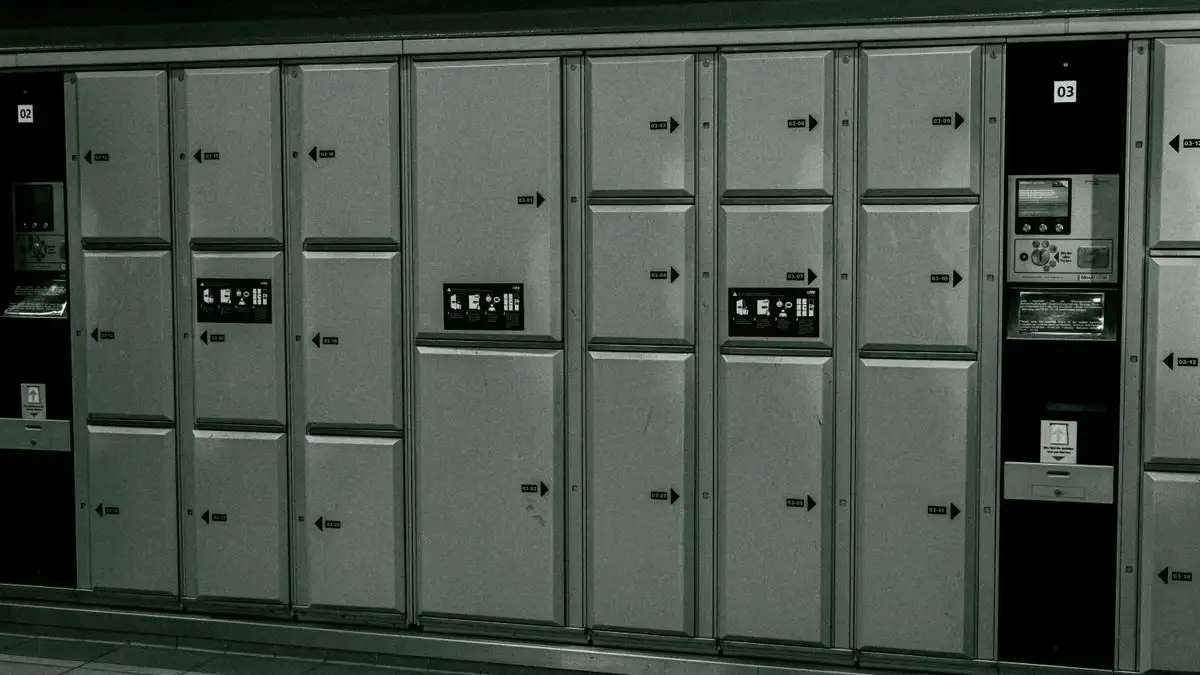
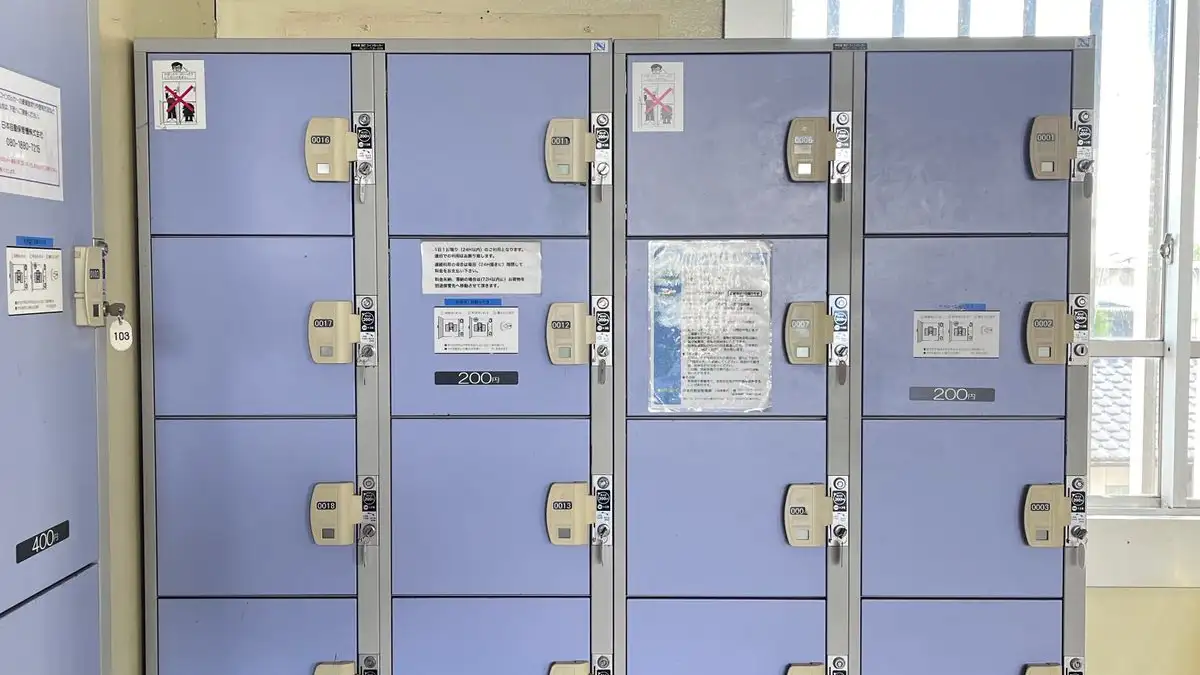
The rule that breaks most overnight storage plans is not the fee — it's the clearing time. Many locker banks inside Tokyo stations are emptied on a schedule posted on the bank itself, and anything still inside when that schedule comes around gets pulled out by station staff and processed as lost property rather than held for you. Multi-day lockers exist. Staffed baggage rooms exist. But the only dependable way to know which one you're standing in front of is to read the small print attached to it before you pay.
The next time you're in a concourse with a bag on your shoulder, do one thing before you feed the machine. Crouch down and read the panel on the inside of the empty locker door beside yours — not the big sign at the end of the row with the English list and the pictograms, but the small plate inside the door, down at ankle height.
That plate is where the actual agreement lives. It tells you when the locker gets cleared, whether the overnight rule differs from the daytime rule, and whether you're in a same-day bank or a bank that will still be holding your bag three mornings from now. Sometimes it's a sticker. Sometimes it's a plate above the coin slot. Sometimes it's a laminated card zip-tied to the frame with the station office number on the back. Almost nobody reads it, which is precisely why it's the thing worth reading.
The clock belongs to the station, not to you
The most expensive misunderstanding in this whole system is assuming a locker rental runs for 24 hours from the moment you pay. Usually it doesn't. It runs against the station's own day, which ends when the station winds down — and for a lot of banks, that means the last train. Pay at three in the afternoon, come back at eleven at night, and you may have burned the whole rental on one evening. Pay at three and come back the next morning and you may find the door hanging open, your bag bagged and tagged in the station office, and a conversation ahead of you that you didn't budget for.
I'm not going to hand you a number here, and you should be suspicious of anyone who does. The clearing time changes bank by bank, station by station, and season by season. A figure that's correct at one bank is wrong at the next one down the platform. The number is printed on the plate. The plate is the authority. Everything else — including this page — is orientation.
Same-day banks and multi-day banks look almost identical
Same-day banks sit in the flow of traffic: beside ticket gates, at the bottom of stairwells, wherever people are already moving through. They're built for commuters and day-trippers, on the assumption that you'll be back before the day closes.
Multi-day banks tend to sit a little off the main path, near a staffed office, with larger units and often a card reader instead of a coin slot. That's a pattern, not a law, so don't navigate by it. Use it as a hint about what to go check. The signage on or near the bank is what settles it, and if the signage is ambiguous, the office staff will tell you in about fifteen seconds.
What the staffed baggage room does differently
Hand a bag across a counter to a person and the arrangement changes shape entirely. You get a claim slip and a line in their book. You also get a cap: staffed counters hold bags for a set number of days and then they stop. That cap isn't always posted, so ask at the counter while your bag is still in your hand. The answer decides whether your plan works. If you're leaving the city for four days and the counter's limit is shorter than that, you want to learn it standing at the counter, not three days later on a phone call from another prefecture.
The counter is also the realistic option for anything that won't fit a locker — golf clubs, skis, a folded stroller, a hard case past the size of the oversized units. Oversized lockers exist at some stations, but they're scarce, they're clustered near the larger banks, and they're the first ones gone.
What neither option will take
Perishable food tops the list. That ekiben, the box of strawberries, the cream pastry you bought on a whim — none of it goes in, and the reason is obvious once you picture a locker sitting closed for two warm days. Live animals are out. So are dangerous goods: aerosol cans, lighter fluid, spare lithium batteries, camping fuel, anything pressurized or flammable.
And valuables. Cash, passports, jewelry, documents. Both lockers and counters exclude them. This isn't a technicality you can work around by being careful, and it isn't the kind of rule where the worst case is a fine. Passport, cards, cash, and anything you'd genuinely mourn stay on your body, not in the bag.
One more thing about the signage: the English version on a locker bank is sometimes a summary of the Japanese plate rather than a translation of it. When the two seem to disagree, the Japanese plate is the operative text, and a staff member at the office can read it out for you.
The ticket, the key, and the IC card
Lockers now come in three flavors. Physical key. Coin-fed with a paper ticket. And IC-card units where your Suica or Pasmo is the key and there is no ticket at all.
The IC version is the easiest to live with and the easiest to lose track of, because nothing in your pocket is reminding you which station, which bank, which number. Lose a key or a paper ticket and the station office can still open the locker — but not on your word alone. Expect to show photo identification and describe what's inside: what kind of bag, what color, roughly what's in it. That description isn't a formality. It's how they confirm the bag is yours before they open a door you can't prove you rented.
There's a habit that kills this problem permanently. Photograph the locker number, the bank location, and your bag sitting inside the open locker before you close the door. Two seconds, and you'll never be standing at a counter trying to remember which of forty identical doors was yours.
Peak season changes the odds
Golden Week, Obon, New Year, cherry blossom season, and any weekend with a major event nearby — the big stations are picked clean by midmorning. If your plan assumes a locker at a major station on a late-March afternoon, your plan is already broken, and no amount of walking the concourse will fix it. Staffed counters fill on those days too, just more slowly.
The backup that actually holds up is a smaller station a stop or two out of the center, where the banks aren't under the same pressure. The second backup, if you're between hotel stays, is the front desk of the hotel you just left or the one you're about to check into — worth a question, often a yes, and it keeps the bag in a system that knows your name.
If you miss the pickup
Here's how the miss usually looks. You come back and the key won't turn, or the door is open, or your IC card doesn't register. The contents were cleared, bagged, tagged with the locker number and the date, and folded into the station's lost property chain. So you go to the station office, and the conversation is now a different one: identification, a description, which bank, roughly when you left it. Then a wait while somebody walks out and finds it. Add days and the bag may have moved from the station office up to a consolidated lost property center across town, which means a second trip and a longer queue.
Two things shorten that path. If you know you'll be late, go to the office before the clearing time and tell them — a bag the staff know about is a completely different situation from a bag nobody has asked about yet. And keep the locker number. It's the only identifier tying you to that door.
The trade-off in one line
A locker is inexpensive, anonymous, and fast, and it ends the moment the clock ends. A staffed room costs more per day, asks for your name, and holds your bag on a record. If you and your bag are going to be apart for more than one night, use the counter and accept the paperwork.
None of this is complicated. It's just posted somewhere most people never look.