Your hotel's luggage hold is the better place for a suitcase than a train station in the two situations where the decision actually matters: the morning you arrive before your room exists, and the morning you check out with a train that leaves after dinner. Station lockers and staffed baggage rooms are built for a gap of hours inside a day you are already spending in the city. A hotel hold is built for a gap between two addresses. Once you can name which of those gaps you are standing in, the question stops being about cost and becomes about where the bag needs to be at the end of the day.
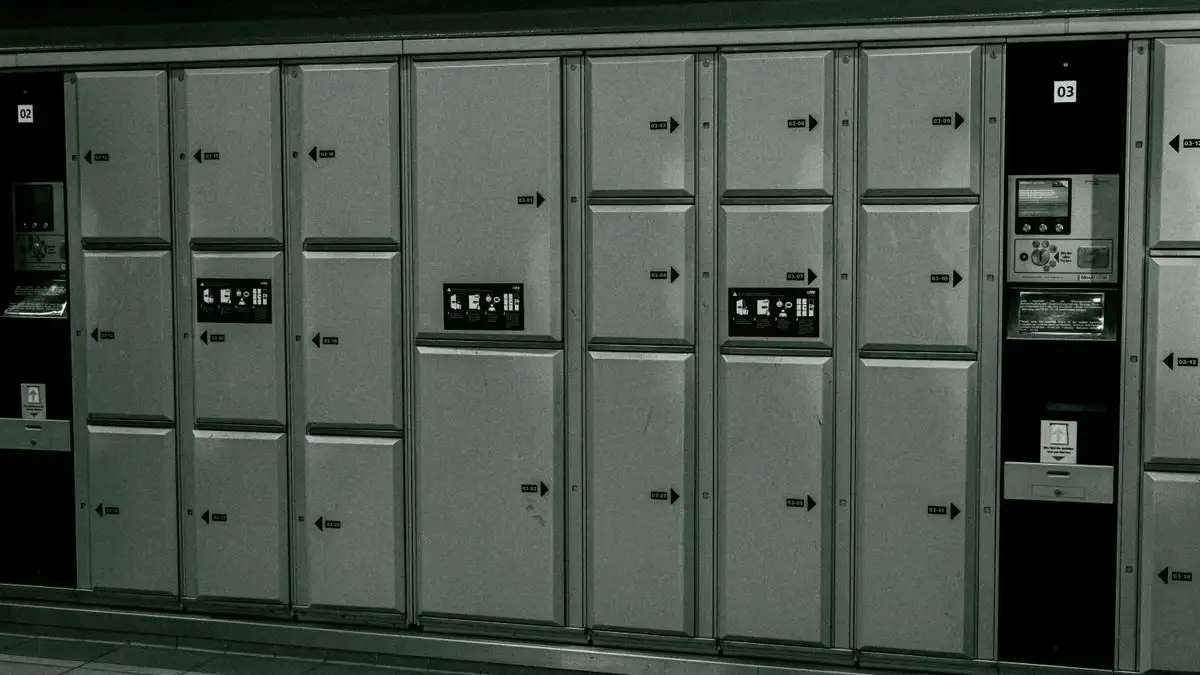
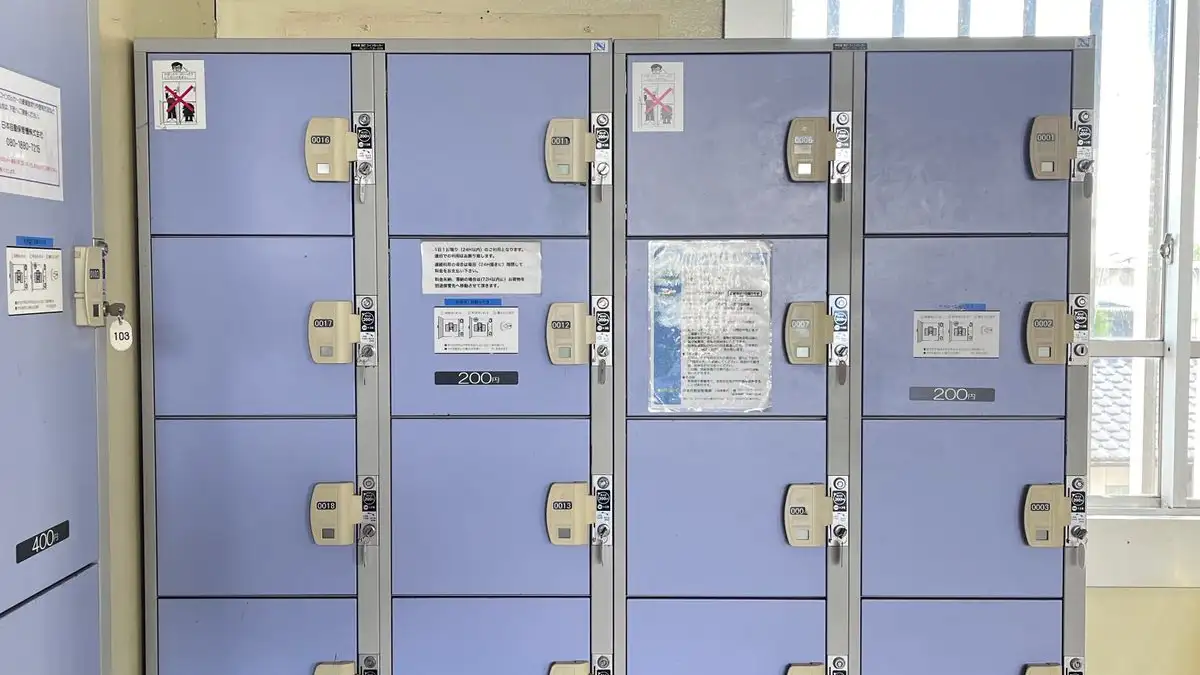
I stopped defaulting to lockers on a morning at a station in west Tokyo, standing in front of a bank of them with a 28-inch suitcase and watching every oversized door show the same red lamp. The bank was full. Not mostly full — full. The staffed counter two floors down had a queue that ran past the ticket gates, and the clock above it said what the clock always says when you need it, which is that your day has already started and you are not in it yet.
That's the moment the whole thing clarified for me. Not the cost. The direction the bag was traveling.
Station storage is a day tool, not a trip tool
Look at what a locker actually promises. It promises the bag will be here, in this building, when you come back through these gates. That's it. It's a promise about a single address, held for hours.
Which is fine, and often exactly right. If you land at 9 a.m. and your room opens at 3 and you want to walk a market and eat lunch and see one temple, the locker is a reasonable answer. But notice what you've agreed to: you will return to this station. Not a station near your dinner. This one. The day has to bend back to the bag.
The hotel hold bends differently. You hand the bag over, you get a numbered slip or a plastic tag, and then the bag is already at the place you're sleeping. It is moving in the same direction you are. You don't have to remember a locker number. You don't have to be back before a cutoff. You walk your day and end it where your suitcase already is.
I carry the tag in my wallet now instead of my pocket. Pocket tags go through the wash. That is a small thing that has cost me a genuinely unpleasant conversation at a front desk.
The morning you arrive before the room exists
The first thing I look at when I walk into a lobby at 10 a.m. is not the desk. It's the floor behind the desk — specifically, whether there's a luggage cart parked there and whether anyone is standing near it.
Most hotels will take a bag hours before check-in. That's a normal, unremarkable service, and asking for it is not a favor. You say you're arriving early and you'd like to leave the bag until the room is ready, and they write something down or hand you a tag. Some will ask for a name and a departure date. Some will take the bag without a word.
Business hotels with a small footprint sometimes have almost no storage behind the desk and will tell you so plainly. Small guesthouses and traditional inns vary more than any other category — some will happily hold a bag, some have nowhere to put it, and a few will only hold it during certain hours because there's one person running the place. I ask before I count on it, and I ask in a way that makes a no easy to give. "Can you hold a suitcase until this afternoon?" beats a hopeful explanation of my whole day.
Here's what the station can't give you at 10 a.m.: the bag is still in the wrong building. You'll either detour back for it or pay again to move it, and the detour is the one that actually costs you something.
The other half, the day you check out
Checkout morning is the same problem in reverse, and I think this is where hotels quietly win. You're out of the room at whatever hour, and your train or flight is at 7 p.m. The bag is now homeless for nine hours.
Almost every hotel will hold it after checkout, usually until the end of the day. Some will hold it for a couple of days. Some charge for that. Some won't hold it past a certain hour because of how the desk is staffed. Ask at check-in, not at checkout, when the person at the desk has time and you have time to hear the answer.
The reason this beats station storage isn't convenience, it's sequencing. Your last stop of the day is almost always the station you're leaving from. If the bag is at the station you arrived into, you either route your whole afternoon through that station or you make a special trip. If the bag is at your hotel, the day ends where it started, and the walk to the platform with your suitcase is the last thing you do instead of a thing you interrupt lunch for.
Where takkyubin fits, and where it doesn't
Forwarding is the third option, and it's the one people reach for too early. Takkyubin sends a bag to an airport, a hotel, or another city. It needs an address. It usually needs a day, sometimes more, and the counter will tell you the cutoff for tomorrow's delivery. It is not a same-day solution for most travelers, and it's not meant to be.
The moment it becomes the right answer is the moment you can say you won't touch the bag for a full day. Two nights in Kanazawa with a flight out of Tokyo afterward: forward the big suitcase to the airport and carry a small bag on the train. Changing hotels mid-trip: send the suitcase ahead to the next hotel and take the subway with just a daypack. That last one is the quiet luxury of the whole system. You skip the platform stairs with a heavy bag, you skip the crush of a rush-hour car, you skip that thing where you're standing in a narrow aisle with a suitcase between your knees and a stranger's coat in your face.
What forwarding can't do is move the bag today to a place you haven't decided on yet. It's an address-shaped tool. If your plan is still soft, the tool doesn't fit, and a hotel hold does.
One mechanic worth knowing: hotels will receive a forwarded bag before you arrive. You don't have to be there. The bag travels to the address, the hotel takes it, and it's waiting on the day you walk in. I've built whole trips around that fact and never once regretted it.
The size question nobody checks until they're standing there
Locker banks are sized for bags, not suitcases. The standard door takes a day bag. The oversized bank takes a larger case, and there are far fewer oversized doors than there are people who need them. On a busy morning, they're gone by mid-morning.
Staffed left-luggage counters at stations handle bigger items, and they're the right fallback when the lockers are full — but they have operating hours, they have queues, and on a holiday weekend the queue is the whole thing.
Hotels don't have this problem in the same way. A hotel hold has a room behind the desk or a wall in a back corridor, and a 28-inch hard case is not an unusual object to them. Forwarding has its own limits by size and weight, and the counter will measure; that's a conversation you have at the counter, not a guess you make in advance.
What hotels are genuinely worse at
I'm not going to pretend a hotel hold is always right. If you're arriving at 6 a.m. off an overnight flight and your room isn't until 3 p.m., the hotel will still take the bag, but you may have nowhere to sit while you wait, and the lobby of a business hotel at 6 a.m. is a specific kind of bleak. A station with lockers, a bench, and a coffee counter might genuinely serve you better for those first few hours, and then you move the bag to the hotel once the desk is staffed and busy.
If you're arriving late at night and the front desk closes, a hold is not available in either direction. Capsule-style lodgings and some small properties have limited desk hours, and you need to know before you commit a bag to a building.
And if you're day-tripping out of a city you're not staying in again, the station is the only place the bag can sensibly be. A hotel you're not a guest of won't hold your bag, and shouldn't.
Three questions before you touch a locker
I use the same three now, and they take about ten seconds.
Where does the bag sleep tonight? If it's the same place I'm sleeping, the bag should go there now, not to a machine.
Will I come back through this station today? If yes, and the gap is hours, a locker is fine. If no, the locker is a trap with a key.
Do I have an address I'm certain about for tomorrow? If yes, forwarding removes the bag from the day entirely. If it's vague, leave it out of the plan.
The mistake I made for years was treating storage as a cost decision. It isn't. It's a routing decision, and the bag is a piece of cargo that has to be somewhere at bedtime. A station locker keeps it where you were. A hotel hold keeps it where you're going. Pick based on which one of those you actually need, and the money sorts itself out.