A Japanese hotel meal plan is a contract about meals, not a discount on them. Bookings come in three shapes — room only, breakfast included, and half board, which means dinner plus breakfast — and each one commits you to a different amount of your day. The term doing the real work is half board, because it puts a second meal on a fixed schedule at a fixed location, and the booking page usually won't tell you which location or which schedule until you're standing at the desk.
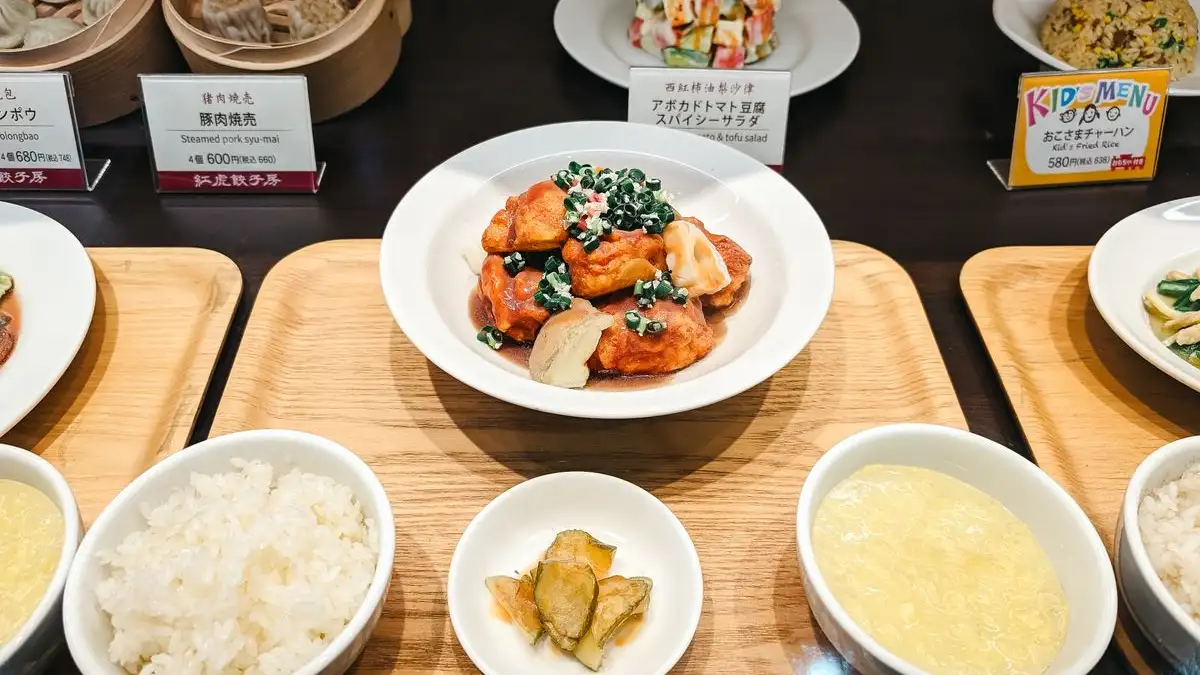
The last time it caught me, my shoes were already off. I was in a ryokan entrance with a floor plan on the counter and one question in the air: dinner, the early sitting or the later one. I had booked a plan that said two meals included and read that as convenience. What I had actually bought was a schedule — a set time, a dining room I hadn't chosen, a course sequence I hadn't chosen — and the answer I gave in that doorway shaped the next eighteen hours.
Read a plan that way and the labels stop being marketing. Here's the system, in the order it decides your day.
Three labels, three different commitments
Room only (素泊まり, sudomari) buys the room and nothing else. In cities this is often a deliberate plan rather than a downgrade: you eat at a counter somewhere near the station, at whatever hour you get back, and nothing in your evening is fixed by the hotel. If your ideal night is a late, wandering dinner, this is the honest plan for you.
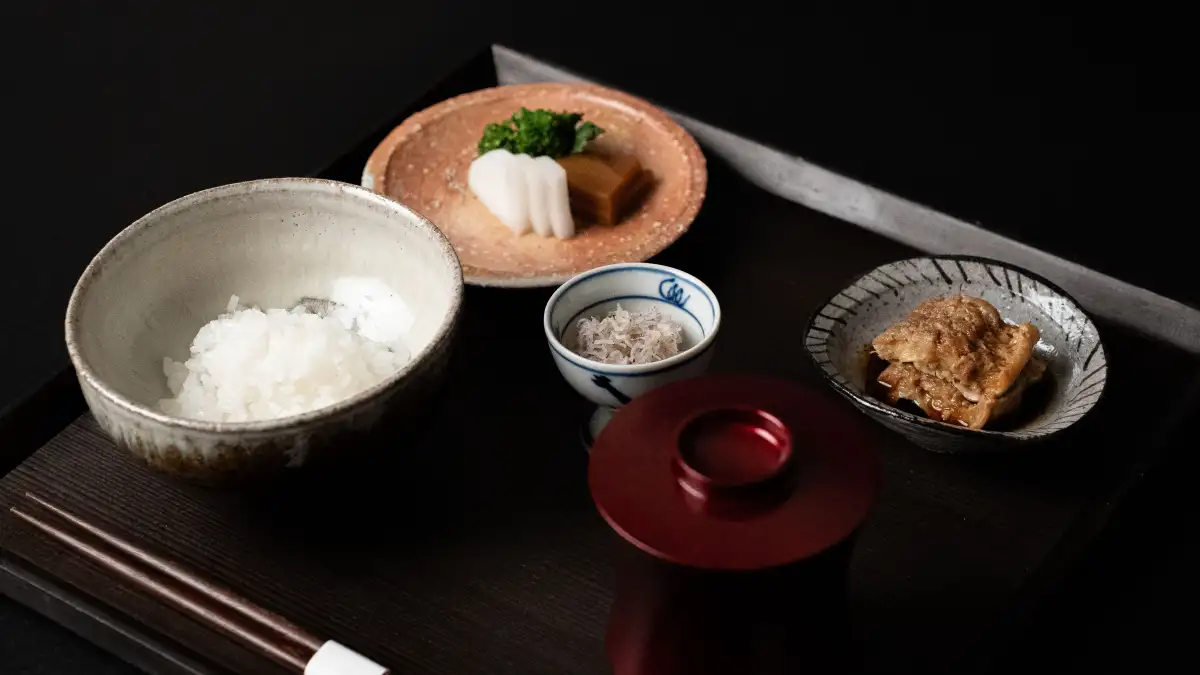
Breakfast included (朝食付き) buys one meal, in the morning, and it does not buy you a say in what form that meal takes. There are three common versions. A Japanese set: grilled fish, rice, miso soup, pickles, nori, sometimes a small egg dish. A Western set: bread or toast, eggs, coffee. Or a buffet. The booking term frequently says only "breakfast included," because the style is fixed by the property. Business hotels lean toward a compact set or a small buffet in a shared room with a tight window and a lot of people moving through it at once. Bigger hotels tend to run a restaurant with a host stand, which may mean a voucher you hand over or simply giving your room number. Some properties offer both a Japanese and a Western option and ask you to pick at check-in. Plenty of others serve exactly one thing and would look puzzled if you asked for the other.
Half board (一泊二食 or 2食付き) is dinner and breakfast. This is the one that reshapes a trip, because your evening now has a fixed point in it. You have to be back, showered, and at a specific place at a specific time. Everything you plan for the afternoon gets planned backward from that.
At a ryokan, half board is the default setting
Ryokan almost always sell half board. What varies — and what the plan name doesn't reveal — is where dinner happens and how it's served.
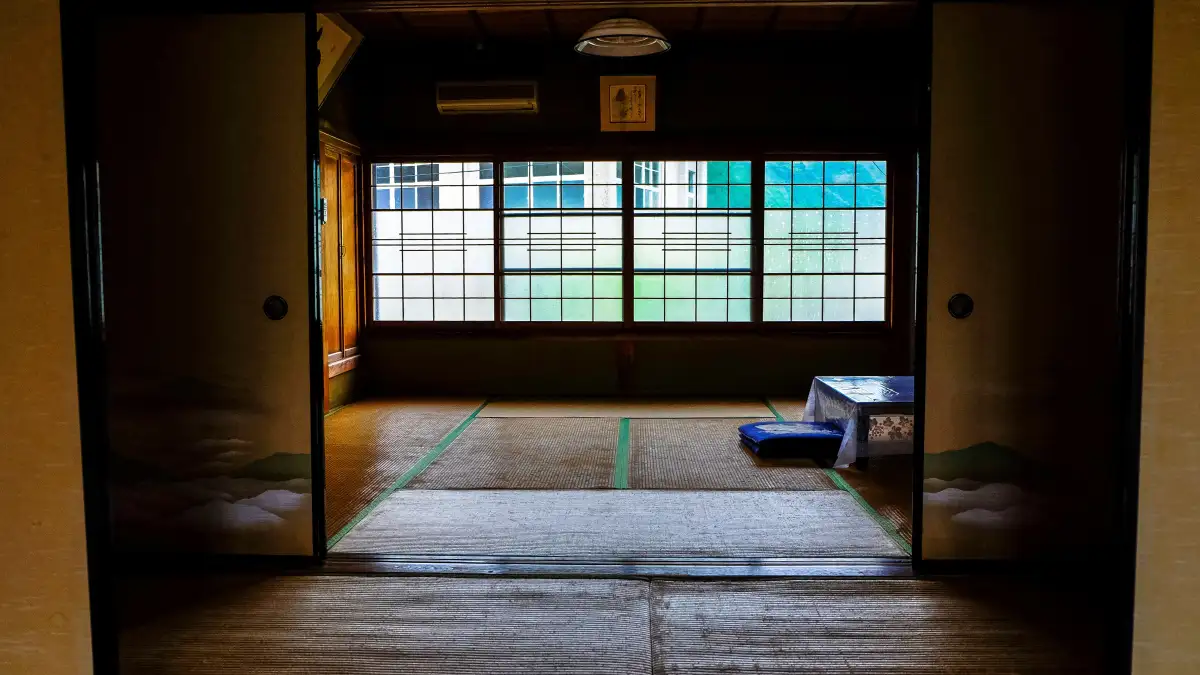
In-room dining means a low table in your own room, courses brought in and cleared between them, and a futon laid out afterward. Dining room service means you walk to a 食事処 or a hall at your assigned time and eat at a table, sometimes in a private room for your party. This is a fixed property decision, often made for staffing reasons, and it frequently goes unmentioned in the booking term. The word kaiseki describes the shape of the meal — a sequence of small courses built around what that kitchen does — and says nothing about whether you'll eat it sitting on tatami or on a chair in a banquet hall.
There's a rhythm that comes with the plan, too. Dinner early, bath after, futon while you're out of the room, breakfast in a fixed window before checkout. You can fight it. You'll enjoy it more if you don't.
In a city hotel, "dinner included" can mean three unrelated things
This is where people get surprised. A dinner-included plan at a city property is usually one of these:
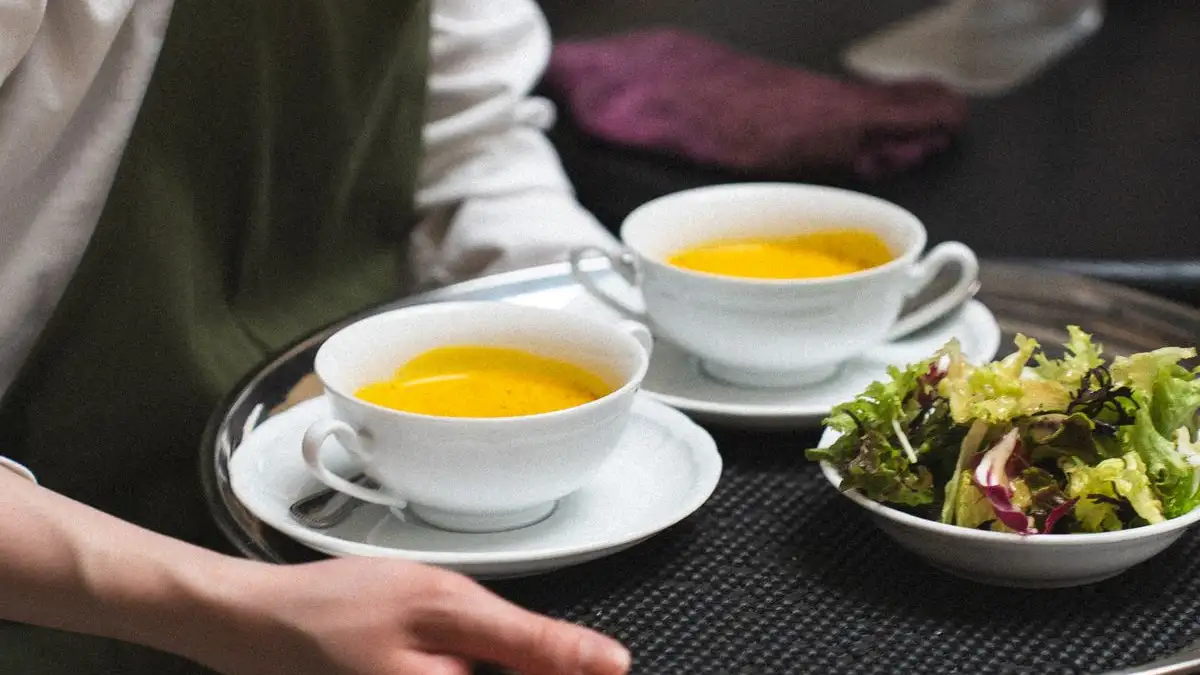
- A set menu in the hotel's own restaurant, at a set time
- A buffet in the same building, with its own entry window
- A voucher for an affiliated restaurant, sometimes in a different building or a few blocks away
The voucher version is the one that gets misread. You are not eating at your hotel. You're walking somewhere with a piece of paper, on that restaurant's schedule, and the voucher may cover a defined set rather than an open tab. It can be a fine meal and a good arrangement. It is simply not the same product as dinner downstairs.
The sitting is part of what you paid for
Meal service in Japan runs on fixed sittings, and the last seating is a hard edge. Miss it and the meal is generally gone, without a refund, because the kitchen prepared to a count. That isn't a hotel being rigid for its own sake; it's how a small kitchen working from a fixed menu operates.
So the question to answer before you commit isn't only "is dinner included." It's "when, and can I actually be there." A half-board plan and a long day out to a distant temple can coexist, but only if you know the seating time before you build the day. Breakfast has the same structure — a window with a last entry, sometimes ending early enough that a slow morning is a choice you're making against the meal. When I book a plan with meals attached, the meal times go on the calendar first. Trains get built around them, not the reverse.
What the booking page doesn't say, and what I ask
A confirmation is good at telling you how many meals and bad at telling you the three things that actually matter: where, in what form, and when. Special request boxes in booking engines belong to the booking engine, not the kitchen — they frequently never reach the property at all, or arrive as a line of machine-translated text nobody has acted on.
So I write to the hotel directly, in plain English, before arrival, and I ask:
- Is dinner served in my room, in a dining room, or off-property on a voucher?
- Is my sitting assigned at check-in, or can I request one?
- What form does breakfast take — Japanese set, Western set, or buffet — and is there a choice?
- What happens if I arrive after the last seating?
- If there's something the kitchen needs to know, how do they want to hear it, and by when?
Ask all of it in one message early, not in three messages late. Small properties answer slowly and sometimes in limited English, and a short numbered list gets a clearer answer than a paragraph of explanation.
Requests the kitchen has to hear about in advance
A fixed multi-course menu is built ahead of time, which is both why it's good and why it can't be adjusted at the table. Any requirement that changes what gets cooked needs to reach the property itself, in writing, with enough lead time for them to plan — not as a note attached to a reservation. Ask them to confirm they've received it and understood it. And accept the real limit: a small ryokan kitchen working from one set menu may simply not be able to accommodate everything, and they'll usually tell you so honestly if you ask early enough for it to matter.
Property type predicts the plan better than the city does
If you want to know what you'll be choosing between before you open a single listing: business hotels and capsule hotels mostly sell room only or breakfast, and their dinner options are thin. Resort hotels and ryokan mostly sell half board, sometimes as the only option on the page. City hotels sit in the middle, and they're the ones most likely to use the off-property voucher arrangement. That one split tells you more about your booking page than the destination does.
I don't treat a meal plan as a perk anymore. It's a schedule with food attached, and the schedule is the part you're actually agreeing to. Read it as three questions — how many meals, where, and when — and if the booking page can't answer the last two, assume the answer is "whatever the property decides" and send an email. Once I started booking that way, half board stopped feeling like something that limited the trip and started being the reason to book a ryokan in the first place.