The phrase "breakfast included" on a Japanese hotel listing tells you that food is part of the rate. It does not tell you what the food is. Nearly every hotel that uses the phrase is selling one of three formats: a Japanese set meal served as a fixed tray, a Western set meal that runs lighter than most travelers from the United States expect, or a buffet that mixes both and is sometimes labeled "viking" instead. Those three formats differ in who chooses, where you sit, how long you're there, and how much food actually arrives. A booking page that says only "breakfast included" has hidden all of that behind four words.
I'm standing at the counter of a business hotel near a station on the Yamanote loop, and you're standing next to me. The clerk has my passport. He taps at the keyboard, then slides a laminated card across the counter with two photographs on it. On the left: a tray. Rice in a bowl, miso soup in a bowl, a small grilled fish, a dish of pickles, a folded square of egg. On the right: a plate. Two slices of toast, a fried egg, three leaves of lettuce, a cup and saucer. He says, "Japanese or Western?" and waits.
Whatever you answer in the next two seconds becomes the shape of your morning. That laminated card is the whole problem with the phrase "breakfast included."
The Japanese set is a meal; the Western set is a courtesy
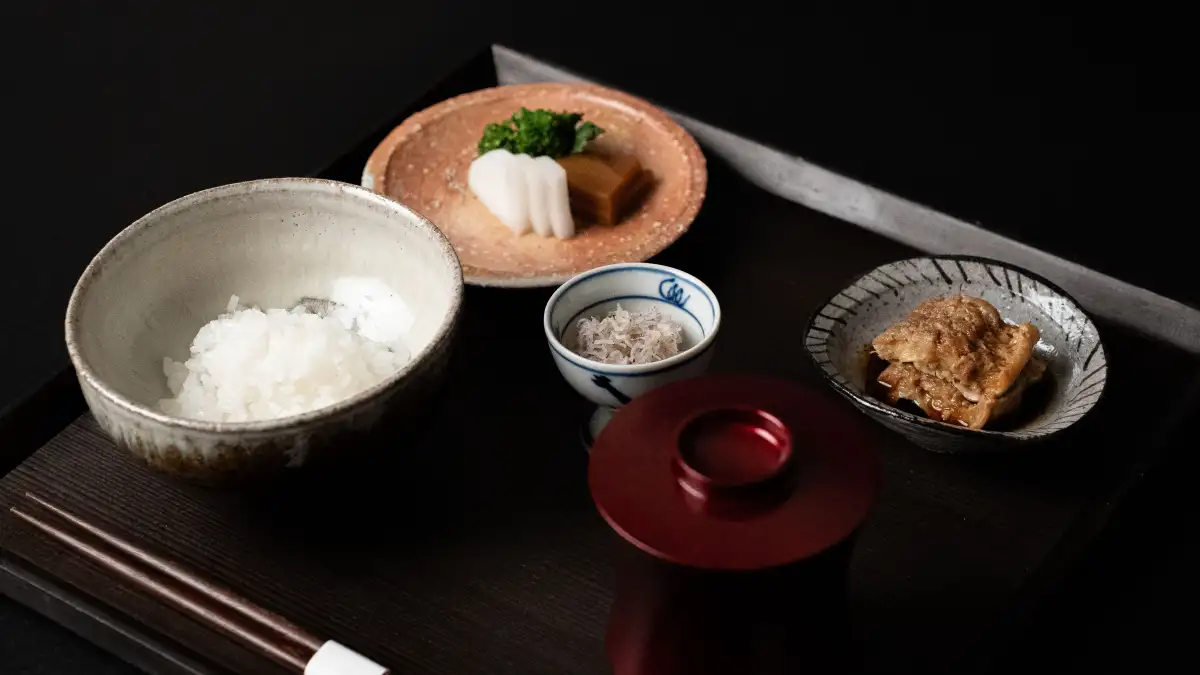
The Japanese set arrives all at once on a tray, and there is nothing to assemble. Rice sits at the center. Miso soup goes beside it. Then grilled fish, pickles, and egg — rolled, fried, or sometimes raw over the rice. You eat it with chopsticks, and it holds you until lunch. It's a complete breakfast built by a kitchen that makes this exact tray every single morning of its life, which is why it tends to be the most consistent thing you'll be handed all day.
The catch is that it's fixed. If you don't eat fish, or you can't face miso soup first thing, there is no swap. The tray is the tray.
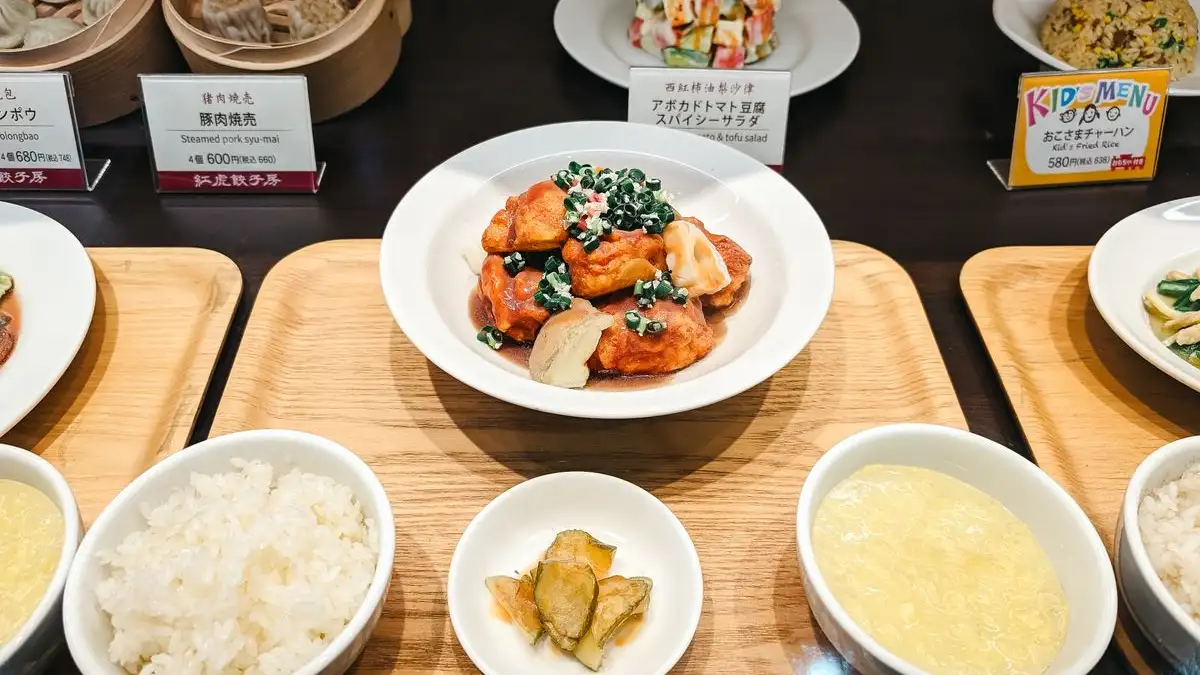
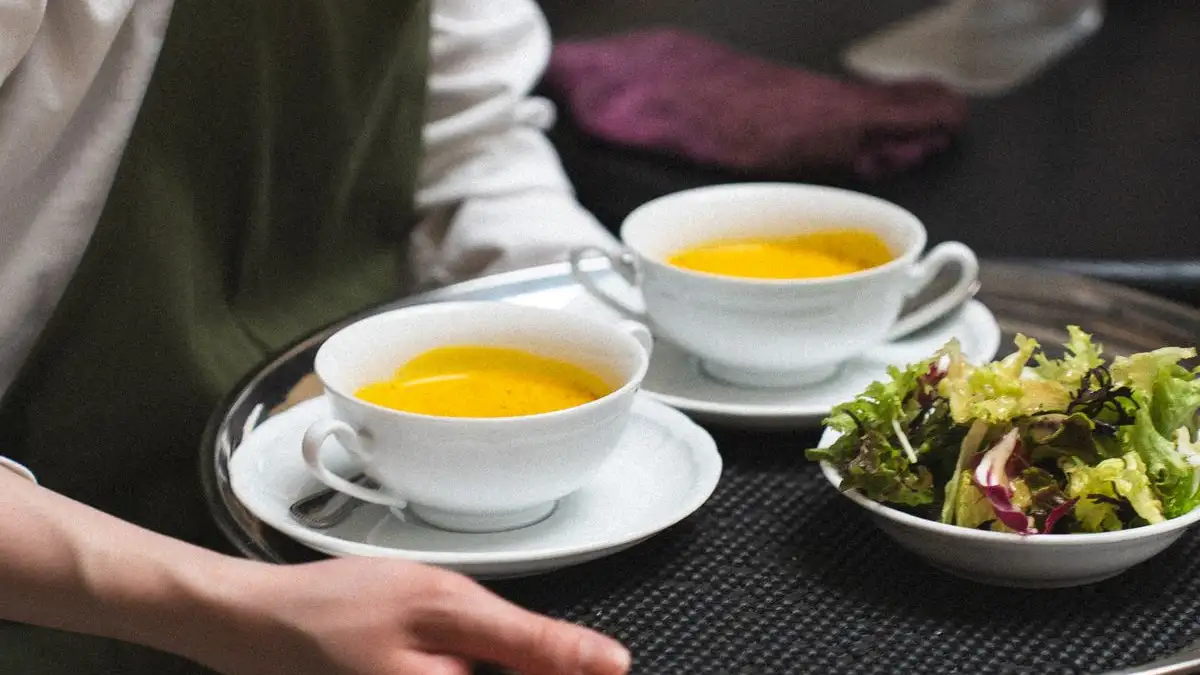
The Western set is a courtesy, not a translation. Bread, eggs, a small salad, coffee or tea, sometimes a thimble of yogurt. It is not an American breakfast and it isn't trying to be one. Sit down expecting a diner plate and bottomless coffee and you'll spend the whole meal feeling shortchanged. Read it correctly — a light plate designed to get a working person out the door — and it does exactly what it says.
That's the first thing the phrase hides. The Japanese set is the hotel cooking for itself. The Western set is the hotel cooking for you. The intent differs, and so does the portion.
"Viking" is a buffet, and a buffet is two kitchens in one room
Some hotels print "viking" on the sign instead of "buffet." Same thing, and at a Japanese hotel it usually runs in two directions at once. One end has rice, miso soup, grilled fish, pickles, natto, seaweed. The other end has scrambled eggs, sausages, croissants, cereal, and a juice machine.
Watch which end looks maintained. The items closest to the kitchen's daily competence are the ones that hold up, and that's usually the Japanese side. This isn't a verdict on quality so much as a fact about repetition — the kitchen makes rice and miso soup every day, and the croissants arrive in a box.
The buffet's real advantage has nothing to do with the food. It's throughput, and it's control. You decide how much you eat, you decide how long you sit, and you can be out the door fast if your train is earlier than you planned. A set breakfast is a sequence somebody else is running.
The choice often happens at the counter, not at booking
Here's the part that catches people. Some hotels ask you at check-in — the laminated card — and whatever you answer gets recorded against your room. Some hotels never ask, because the plan you booked already decided. Some have no choice at all, because everything is a buffet.
If the booking page said only "breakfast included," assume you don't know which of those three cases you're in, and ask at the counter before you go up to the room. Point at the picture if there is one. "Which breakfast do I have?" is a completely ordinary question and the front desk answers it all day long. What you don't want is to find out at the dining room door, when the staff is holding a tray and you're holding the wrong expectation.
One small tell: if your confirmation still shows the original Japanese plan name alongside the English, look for the character for Japanese or the one for Western in it. The translated version almost always flattens both into "breakfast included."
Where you eat is half of what you bought
The format isn't only the food. It's the room.
A dining room means a table, a chair, and a set amount of time. A lounge sometimes means the same food in a softer setting. A partner café means you leave the building — you walk outside, in whatever the weather is doing, in whatever you're wearing, and you come back afterward. That isn't a downgrade. It's a different morning. If you're the type who wants to be outside and moving early anyway, a café arrangement is fine. If you wanted to eat before you got dressed, it isn't.
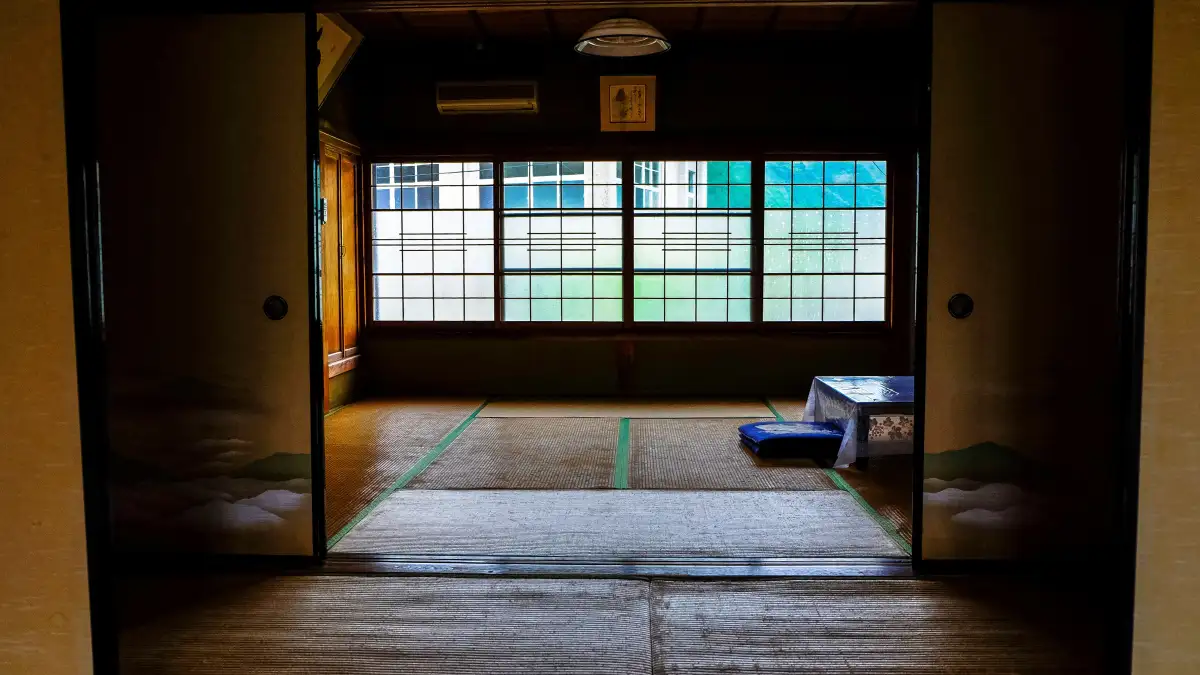
At some traditional properties the Japanese set comes to your room on a low table, which is its own format entirely. No room to choose, and no room to leave.
When "breakfast" means a voucher and a convenience store
At the budget end of the business-hotel range, the hotel often doesn't cook at all. You get a voucher, and the voucher works at a nearby convenience store or café: a coffee and a sandwich, or a rice ball and a bottle of tea. This isn't a trick and it isn't a downgrade buried in fine print — it's the honest form of "breakfast included" at that price tier, and the front desk will tell you exactly where the voucher works if you ask.
What changes is the shape of your morning. You're standing at a counter instead of sitting at a table. You're choosing off a shelf instead of off a menu. For some trips that's better: you eat when you want, you take it with you, you're not tied to a room. For others it's the exact opposite of what you pictured when you ticked the box.
What to actually check before you book
Read the plan name, not the filter. "Breakfast included" is a checkbox. The plan name underneath it is the contract. Look for the words that announce the format: Japanese set, Western set, buffet, viking, light breakfast, morning set, voucher. If none of those words appear anywhere, you're buying an unknown, and the reasonable move is to assume you'll be asking at the counter.
Then ask yourself one question: what does my morning actually look like? If you need to be on a platform at a specific time, a buffet or a voucher beats a tray, because both let you compress. If you want one quiet, complete meal before the day starts, the Japanese set is the one built for that. And if you want something that feels like breakfast at home, order the Western set knowing what it is — a small, correct plate, not a big American one.
"Breakfast included" isn't hiding a bad deal. It's hiding a format. Once you know there are three of them, and that the choice sometimes belongs to you and sometimes doesn't, those four words stop being a promise and become a question you know how to ask.