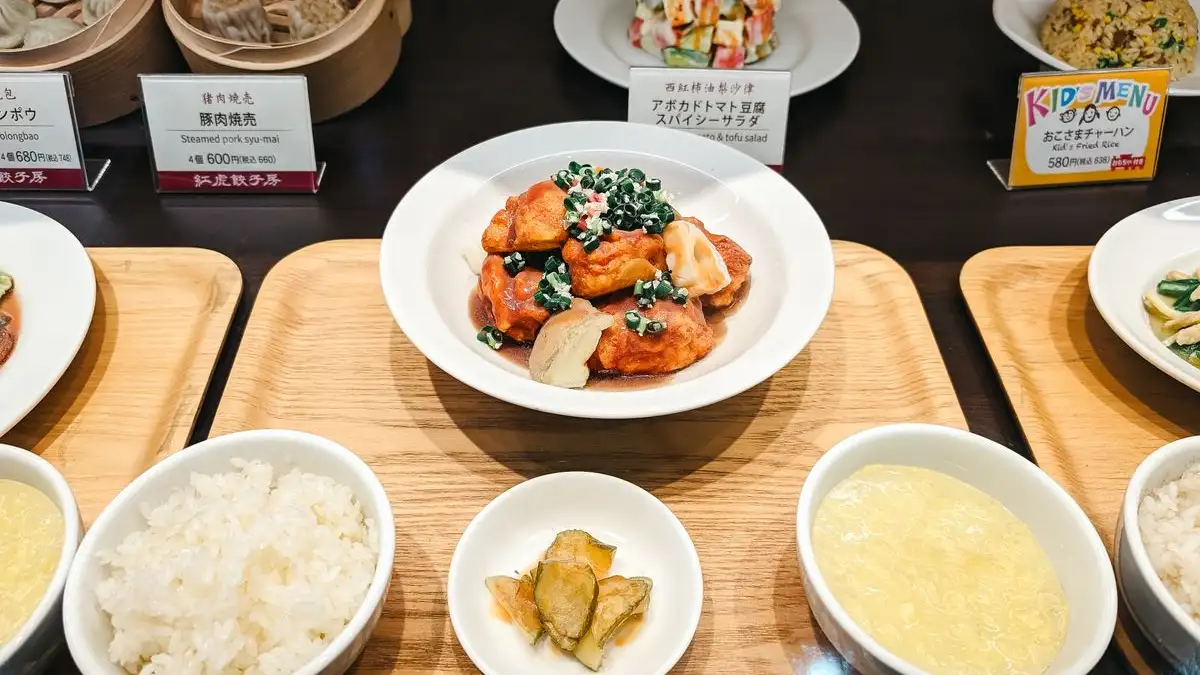
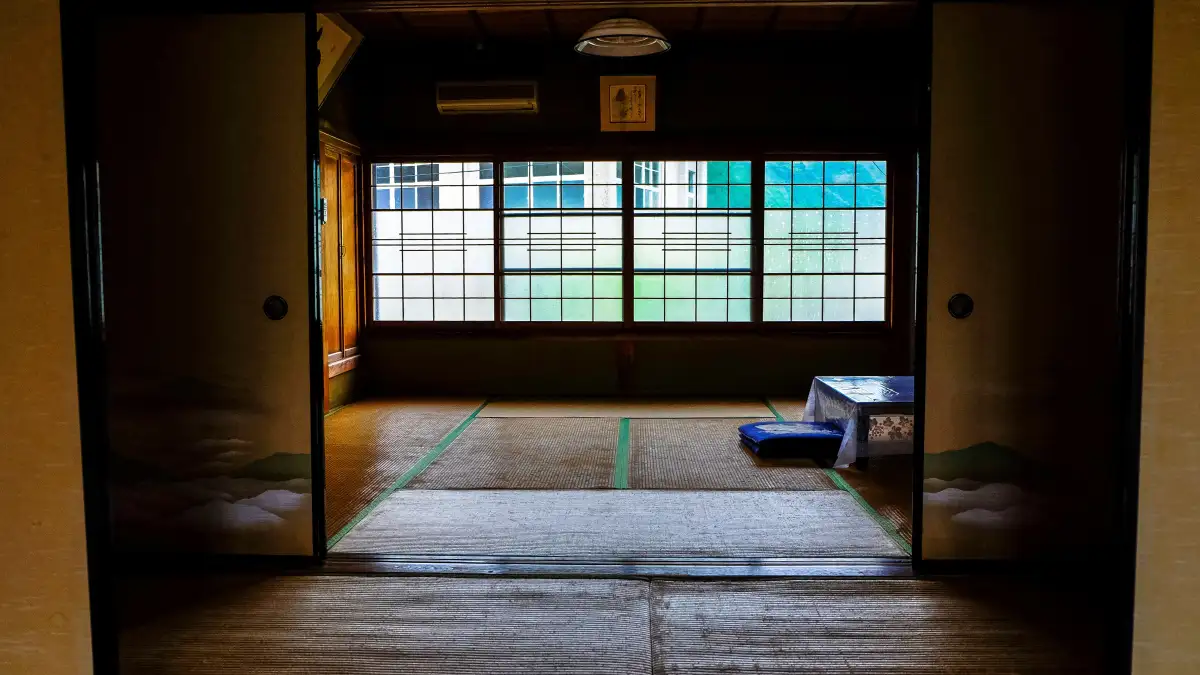
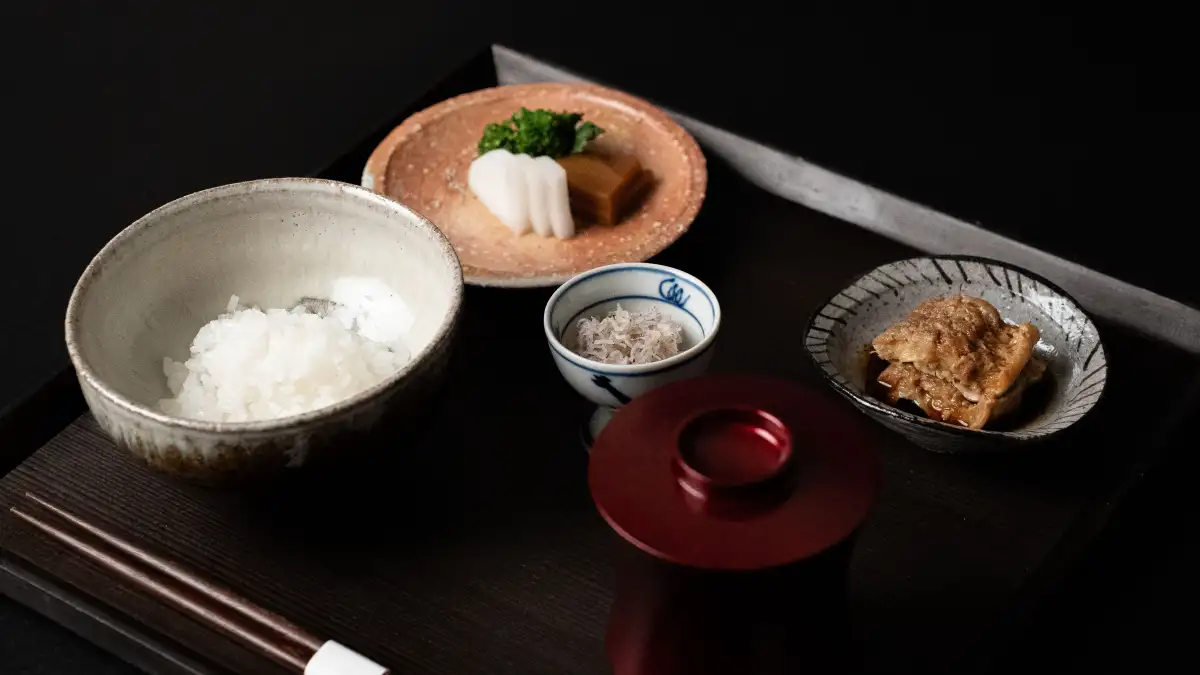
A dinner-included plan at a city hotel in Japan is a real meal, but it is rarely the meal the words suggest. Outside a ryokan, the dinner folded into a half-board rate is the property's own standard dinner service, and that service takes one of three shapes: a buffet in the main restaurant, a set course, or a voucher redeemed at a partner restaurant nearby. The shape, not the phrase "dinner included," is what decides whether the plan is worth the money. Half board at a city hotel is not a smaller version of a ryokan kaiseki. It is a different product that happens to share a label.
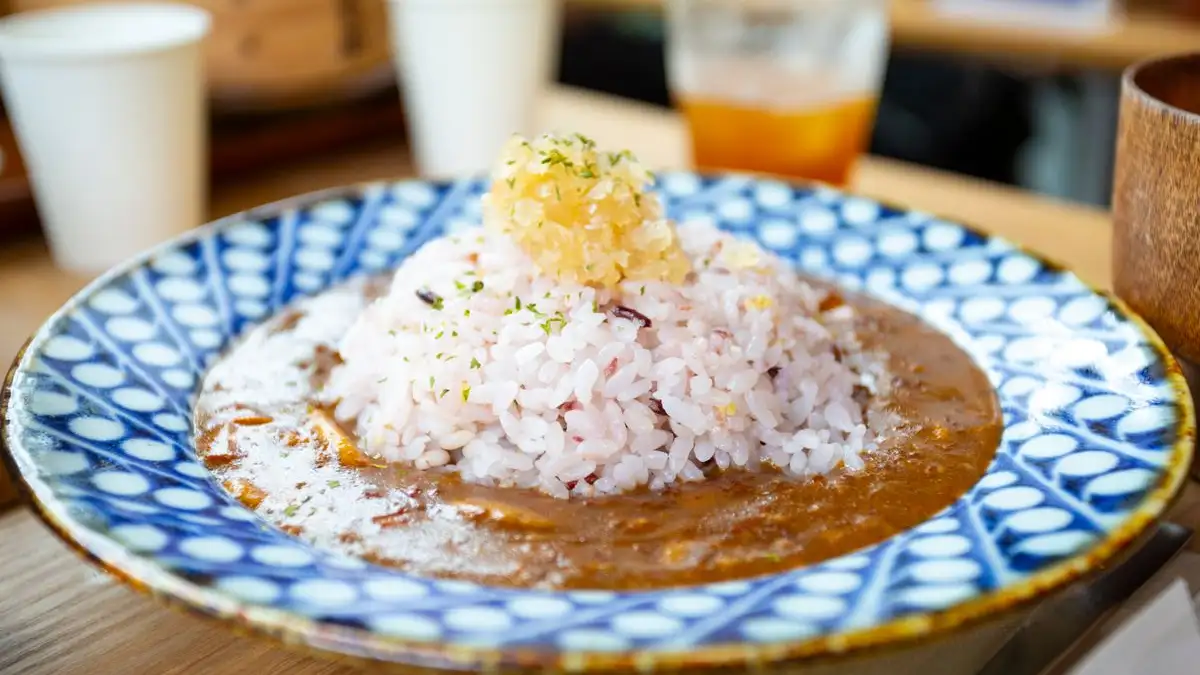
The decision that matters gets made at the front desk, and nobody flags it as a decision.
You are standing at check-in with your passport in one hand and a suitcase handle in the other. The clerk works through the registration form, then turns a laminated card toward you. Rows of times. A highlighter resting on the counter. A question: which sitting?
If you get the card, you bought a meal inside the building.
Now the other version. No card. Instead, a folded sheet of paper with a restaurant name printed on it, a small street map on the back, and a stamped figure in the corner. A short walk, the clerk says, tapping the map.
If you get the paper, you did not buy dinner. You bought a credit.
That distinction is the whole thing, and I have watched it confuse more travelers than any other line item on a Japanese hotel bill. Two bookings that both read "dinner included" can mean a seated buffet upstairs and a coupon for a restaurant three blocks away, and the booking page will use the same six words for both of them.
The three formats, in the order you're likely to meet them
Buffet first, because in city hotels it's the most common. It's the hotel's normal dinner service, which means guests who never bought your plan are eating the same food at the next table. The spread typically runs Japanese, Western, and Chinese sections, and the theme rotates with the season. Here's the trap: plan descriptions get written at some point and often aren't rewritten. A listing that mentions a seasonal theme tells you a theme exists, not what it will be on the night you actually sleep there. If one specific dish is the reason you booked, you booked the wrong thing.
Set course is next. A defined sequence, seated, at a fixed time, in the hotel's restaurant or a dining room set aside for plan guests. This feels closest to a restaurant meal, and in plenty of properties it is one. It is still not kaiseki unless the property says kaiseki and means it. A city hotel's course dinner reflects that hotel's kitchen and that hotel's price point. It's a real dinner. It's just not a destination dinner, and that gap matters if the meal was part of why you chose the hotel.
Voucher is the one people miss. A voucher plan gives you a fixed allowance at a designated restaurant, and an allowance behaves like a credit, not like a meal. Spend under it and you generally don't see the remainder back. Spend over it and you settle the difference at the table. Drinks usually sit outside the allowance entirely. And because the restaurant is a partner rather than the hotel's own operation, the booking tends to run through the front desk, the seating is at the partner's discretion, and a late cancellation can land on your room bill. None of that is a scandal. It's a different transaction, and it behaves differently the moment your evening goes sideways.
Why half board reads differently outside a ryokan
At a ryokan, the meal is the reason the building exists. The kitchen, the pacing, the room layout, the bath schedule, all of it points at dinner. Half board there is the product, and the room is the accessory.
A city hotel is the reverse. The room is the product. Dinner is a bundle attached to it, frequently the same service a walk-in guest receives. Which means the value in a city hotel's half board isn't culinary. It's logistical. You are buying the removal of one decision at the end of a day when you will be tired, possibly jet-lagged, possibly arriving after dark in a neighborhood you have never walked.
That is a real thing to buy. It's just a different thing from the one most people think they're buying when they see the words.
The sitting is the constraint nobody reads about
Fixed seating is standard. You choose a slot at check-in, or one gets assigned to you. Once it's set, it doesn't move because your flight slipped or because you stayed out longer than planned in another part of the city.
So ask yourself honestly: on the night in question, will I be back? If the honest answer is "probably," a fixed sitting is a gamble. If the answer is "yes, and I'll be relieved not to go out again," it's the best part of the plan. And if you miss the sitting, understand that you generally do not recover the value as cash. The table was held, then released.
Check the calendar before you check the format
Some dinner plans run only on certain nights of the week, and some exclude peak dates. A multi-night stay on a "dinner included" rate can therefore produce dinner on some nights and nothing on others, with no visible change in the rate structure. The same three words can also mean dinner every night or dinner once during the stay, depending on how the plan is written. Those are not small differences. They're the difference between a bundle that covers your evenings and one that covers a single evening.
This is the part I'd push hardest on. Everyone asks about the format, buffet or course or voucher. The calendar question is the one that actually changes the arithmetic.
How I screen a plan before I book it
Read the plan name in Japanese if you can get to it. English pages on booking sites tend to flatten three different products into "dinner included." The Japanese plan name usually carries the format word, and the format word is the answer.
Then check four things:
- Where the meal happens. The hotel's own restaurant, or a restaurant with a different name and a map?
- Whether the wording includes any of these: voucher, ticket, allowance, credit, drinks not included. Any one of them means you are looking at a credit.
- Whether there are day-of-week or date exclusions buried in the terms.
- Whether the sitting time honestly works with your arrival, not optimistically.
Then one question that isn't on the page at all: what's outside the door? If the hotel sits in a neighborhood you actually want to eat in, the bundle is competing against something better and you're paying to skip it. If the hotel sits in a district that goes quiet after the offices empty, the bundle is doing you a genuine favor.
The honest version
A city hotel dinner plan isn't a trick and it isn't a treat. It's a logistics purchase, and it's priced like one. The failure mode is reading "dinner included" as a statement about food when it is really a statement about scheduling: that for one evening you won't have to figure out where to eat, and the hotel will seat you at a time it picks.
If that's what you want, buy it deliberately. If what you want is a memorable meal, a city hotel's half board is the wrong tool, and a voucher plan at a partner restaurant is the wrong tool twice over.