Gluten-free travelers in Tokyo should read the shop's own Japanese-language description of its kitchen before they trust any label in English, because "gluten-free," "gluten-friendly," and "wheat-free" are used in three different and largely undefined ways there, and none of them describe what happens at the fryer, the cutting board, or the sauce shelf. The label tells you whether a conversation is worth starting. The kitchen's physical setup tells you the answer.
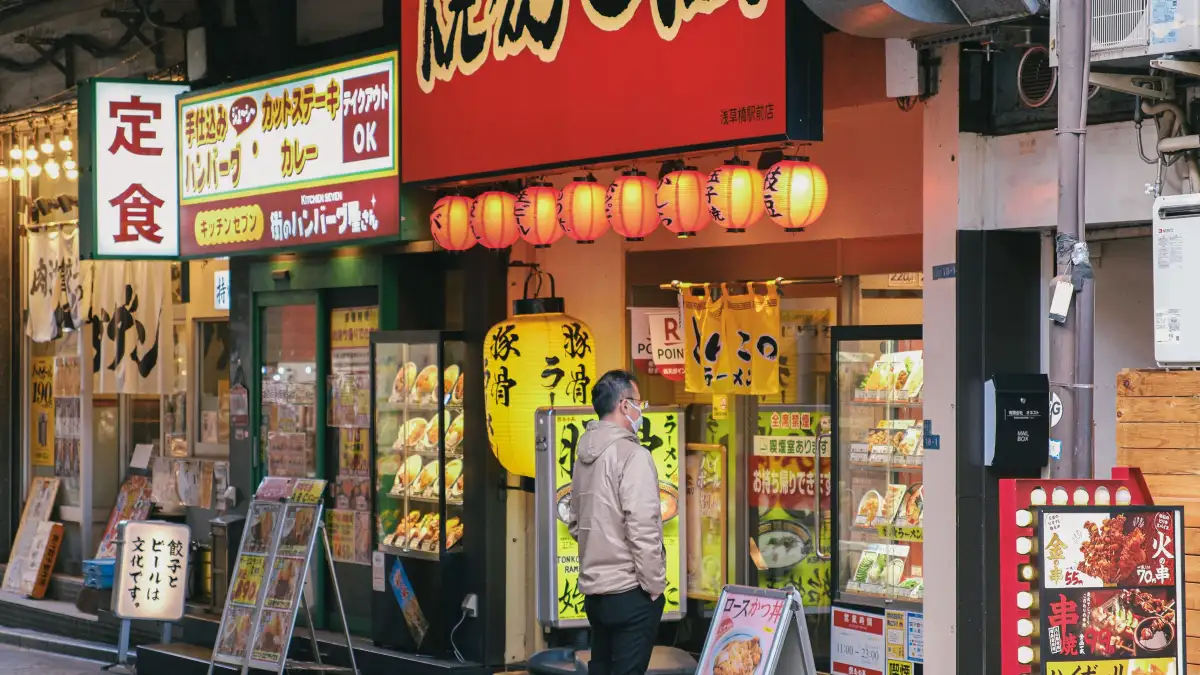
The question I asked first, and why it was the wrong one
The first time I stood in a small bakery on a residential street in Tokyo, the window sign said gluten-free in English letters, and I asked the person behind the counter the only question I had: "Is this gluten-free?" She said yes, and smiled, and I bought a rice-flour cake and ate it.
Later that week, at the same shop, I asked a slower question through a translation app: is the flour mixed in this room, on this counter? The answer changed shape. The rice-flour items were made in the same room, on the same bench, with the same rolling pin and the same cloth, and the wheat cakes went into the same oven.
That wasn't a lie, and it wasn't a translation failure. In Japanese, グルテンフリー (guruten furī) is a borrowed phrase, and nobody enforces it the way a U.S. gluten-free claim is tied to a defined threshold and a testing regime. So the word floats. In one shop it means a dedicated kitchen with a written ingredient policy. In another it means the wheat can be left off your order. In a third it's an English word on a tourist-facing menu with no Japanese counterpart anywhere in the building, printed because visitors search for it. All three exist, often within a ten-minute walk of each other. The word itself doesn't sort them.
Three labels that sound like one thing
グルテンフリー (gluten-free). A claim about gluten, and the strongest version of it. When it's real, there's usually a paper trail: a printed ingredient policy, a staff member who can name the flour blend, a note about which oven and which shelf. When it isn't real, it's just a word in a font.
グルテンフリー対応 (gluten-free "supported" or "handled"). This is the accommodation category: we will remove the wheat from your order. It says nothing about the fryer, the board, the tongs, or the soy sauce. Most of the "gluten-friendly" English menus I've run into are translating this phrase, and the English version sounds considerably stronger than the Japanese one.
小麦粉不使用 (no wheat flour used). A statement about a single ingredient. It is not a statement about gluten, and this is where people get caught. Barley is mugi, and mugi is everywhere in Japan: blended into rice, brewed as tea, fermented into mugi miso, folded into mixed-grain bread. Rye shows up in imported goods, and malt extract hides in drinks and sweets. Every one of those is wheat-free and none of them is gluten-free. "Wheat-free" on an English menu is almost always this phrase wearing a better suit.
And "gluten-friendly" as an English term has no Japanese anchor at all, so there's nothing to cross-check it against. When I see it, I treat it as marketing and start the vetting from zero.
What's genuinely on your side
Rice flour isn't a specialty ingredient here. It's a shelf item, sold next to the wheat flour in any supermarket. That means a real share of Japanese sweets and baked goods are gluten-free by construction even when nobody advertises it: mochi in its many forms, kuzu desserts, warabi mochi, plenty of senbei, sweet potato sweets, rice-flour cakes that never had wheat in the recipe to begin with. The catch is almost never the recipe. It's the room. Shared tins, shared benches, shared sifters, a bag of flour opened on the same counter.
Soba is the trap that looks like the gift. All-buckwheat soba (juwari) exists and is excellent, but most soba is cut with wheat, and even the pure kind is often dusted with wheat flour to stop the strands from sticking, then boiled in the same pot as the regular noodles. Ask about the dusting flour and the pot, not the percentage on the menu.
The routine I actually run
Three questions, asked separately, never as one.
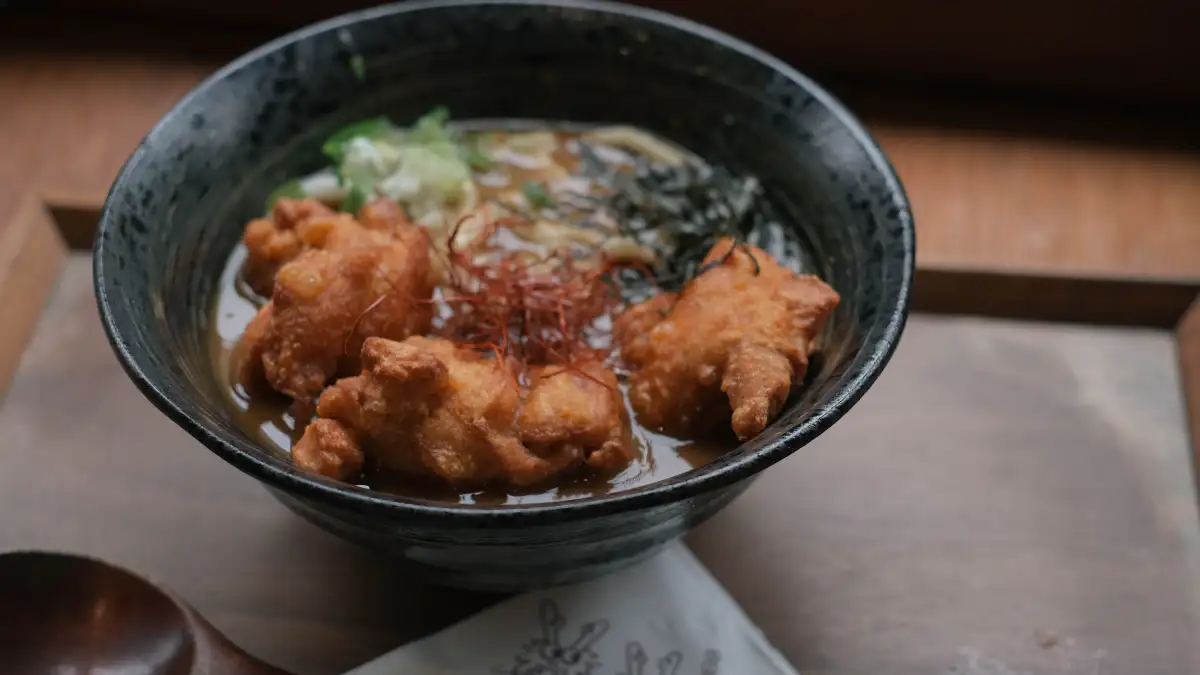
- The oil. What else goes into the fryer? Karaage, tempura, tonkatsu, korokke — all of it is battered in wheat, and the oil doesn't discriminate. If the fryer is shared, that tells you which items are off the table no matter how the menu describes them.
- The surfaces. Which board, which knife, which cloth, which colander. Ask about まな板 (manaita, cutting board) and 包丁 (hōchō, knife). This is the question most people never think to ask, and it's the one that decides the rice ball.
- The sauces. Soy sauce is the quiet one: almost all Japanese soy sauce is brewed with wheat. Tamari (たまり) is the exception and it's frequently not in the kitchen at all. Mentsuyu, ponzu, tonkatsu sauce, yakiniku tare, curry roux, most bottled dressings — wheat, usually. Barley miso too. This is why yakitori makes a good test case: salt-grilled (shio) and sauce-glazed (tare) are the same chicken off the same grill, and the entire difference lives in a bottle.
Ask them one at a time. A single "is this gluten-free?" invites a single yes — that's how conversation works. Three separate questions force the person to picture their own kitchen, and you can hear whether they're picturing it or guessing. If the answers come instantly and identically from someone who has never stood at the pass, ask for the person who actually cooks. Not the manager on the floor. The cook.
Cross-check the two languages
This step catches more than any other, and it costs nothing.
English listings on aggregators and travel sites are written by whoever wrote them, and translation tends to widen. 小麦粉不使用 becomes "gluten-free" in the English version — a claim the shop never made in its own language. When the Japanese and the English disagree, the Japanese is the ceiling.
Restaurants in Japan often keep an allergen chart, アレルギー表, covering the mandated allergens: wheat, buckwheat, egg, milk, peanut, shrimp, crab. Worth asking for. But read what it is: a list of ingredients in the dish. It will tell you the curry roux contains wheat. It won't tell you the roux was stirred with the same ladle as the rice. Ingredient documentation and cross-contact documentation are different documents, and most kitchens only have the first one.
Two kinds of kitchens, two kinds of answers
Small dedicated places — a rice-flour bakery, a one-room gluten-free cafe — tend to have thought this through because they had to, and they can usually describe how they handle shared surfaces and tools. They also tend to be tiny, with one person doing everything. That means the conversation needs to happen before the rush, by message or at an off hour. Walking in at noon and asking for a five-minute kitchen consultation is asking for the least reliable answer of the day.
Big chains won't change their fryer for you, and expecting it sets you up to misread what they tell you. What they can hand over is their standard allergen documentation applied to their standard menu, which is honest and often enough to decide yes or no. It's a yes-or-no answer, not a negotiation.
What I do before I sit down
Read the Japanese first. Ask the three questions separately. Ask what happens between dishes — how the board is wiped, whether there's a dedicated fryer, whether the sauce comes out of a shared jar with a shared spoon. Then decide for myself, knowing the answer can shift with who's on shift that day. A kitchen is a room full of people at a particular hour, not a certificate on a wall.
And keep the scale honest. Whether a shared fryer is disqualifying depends on you — on how your body reacts and how much risk you're willing to carry on a given afternoon. I can't make that call for anyone else, and neither can a menu. What I can do is get a clear picture of the kitchen before I decide, and that part is actually under my control. The word on the sign is where the search starts. The three questions are where it ends.