Ask before you book, not at the table. A gluten-free ryokan dinner is not a dish a kitchen can improvise at six in the evening — it is an edit to a fixed set menu that was written and shopped for days earlier, and whether that edit is possible depends far less on how accommodating the staff want to be than on the format of the meal itself: a multi-course kaiseki dinner, a Japanese breakfast set, or a buffet.
I learned to look at it that way after watching a request die in the wrong room. Someone mentions it at check-in, the clerk nods kindly, and by dinner the note is nowhere near the person holding the knife. What I do now is a sequence, and it starts weeks before the flight.
The kitchen shops before you land
Stand in a ryokan lobby at three in the afternoon and the place feels unhurried. The floor is quiet, someone is setting out tea, the slippers are lined up. Behind the wall, the kitchen is already mid-count — how many guests, how many trays, how many fish can go on the grill at once. The evening menu is not a list of things they are capable of cooking. It is a plan with a shopping list attached, and the shopping happened before you got there.
That single fact explains the whole timing problem. A note in the reservation record has been read by the person who orders the food. A sentence spoken at the front desk has to travel from a clerk handling arrivals and luggage to a kitchen that is already prepping, and sometimes it arrives as "the guest mentioned something," which is not the same thing as an instruction. The gap isn't rudeness. It's the distance between two desks.
Where wheat actually sits in the kaiseki tray
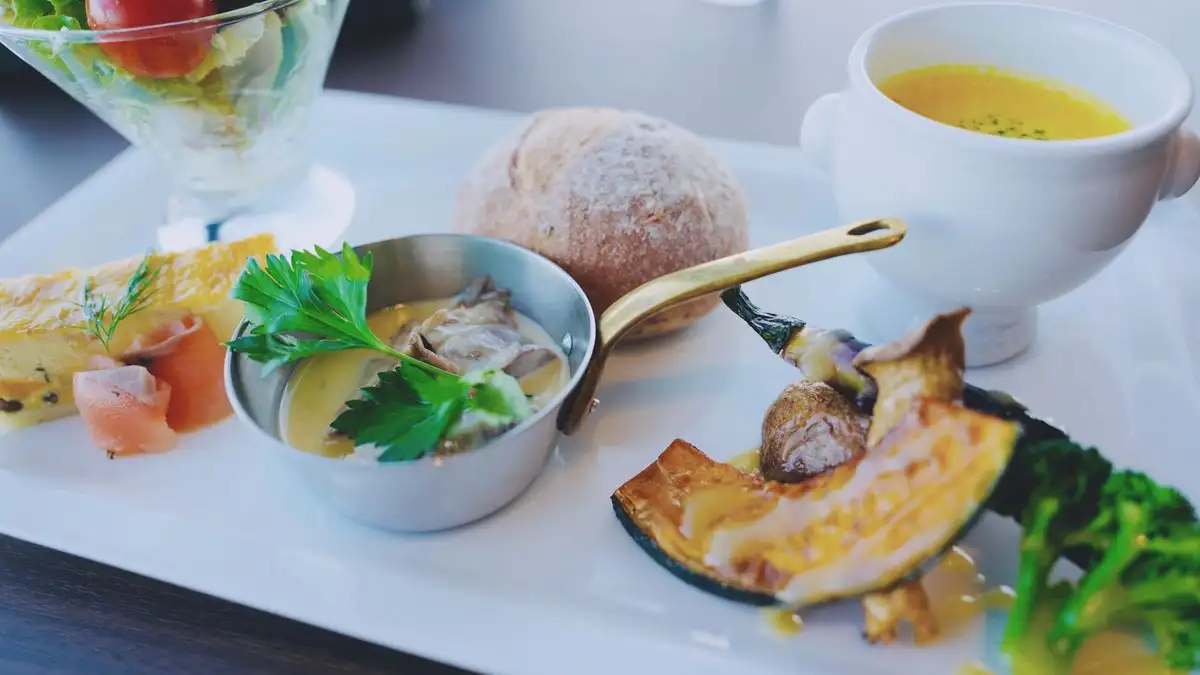
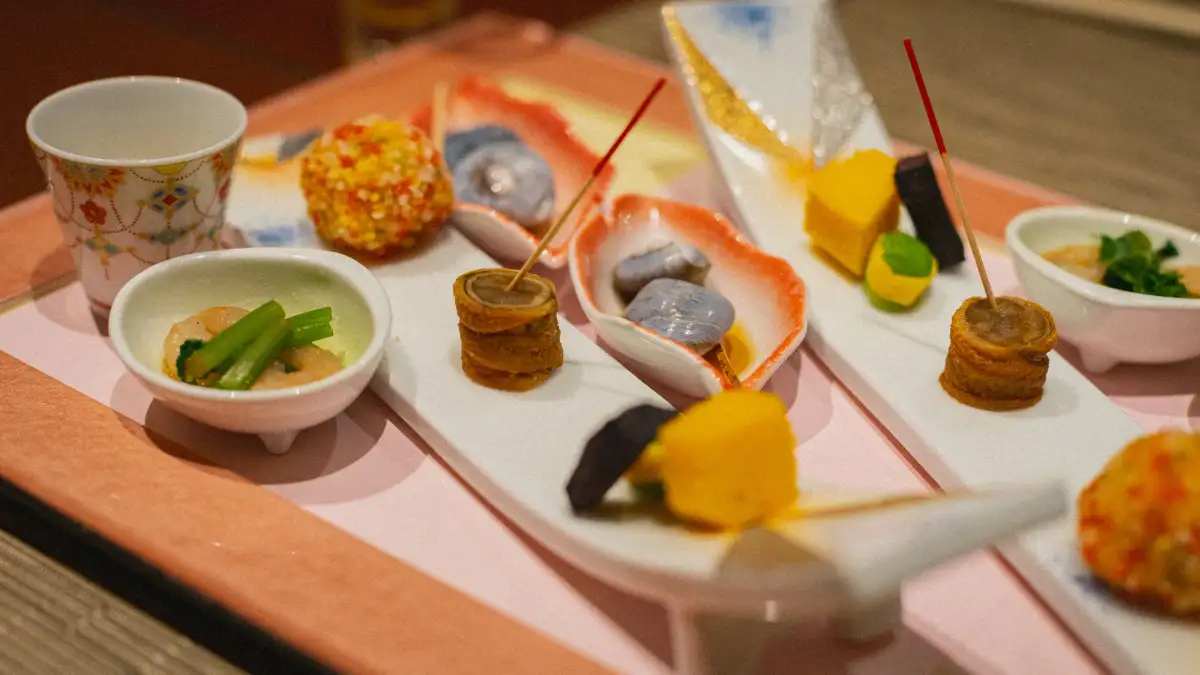
Picture the tray as it arrives, course by course. Sashimi first, with a small dish of soy sauce you can simply not use. Then a clear soup — usually built on dashi, then seasoned with soy sauce and salt. Then a simmered dish, which is where soy sauce, mirin, and sugar have been working on a vegetable or a piece of fish for an hour. Then something grilled, often with salt only. Then something fried, if the kitchen is feeling generous, and that one is the question mark: batter, or a starch-thickened sauce poured over the top.
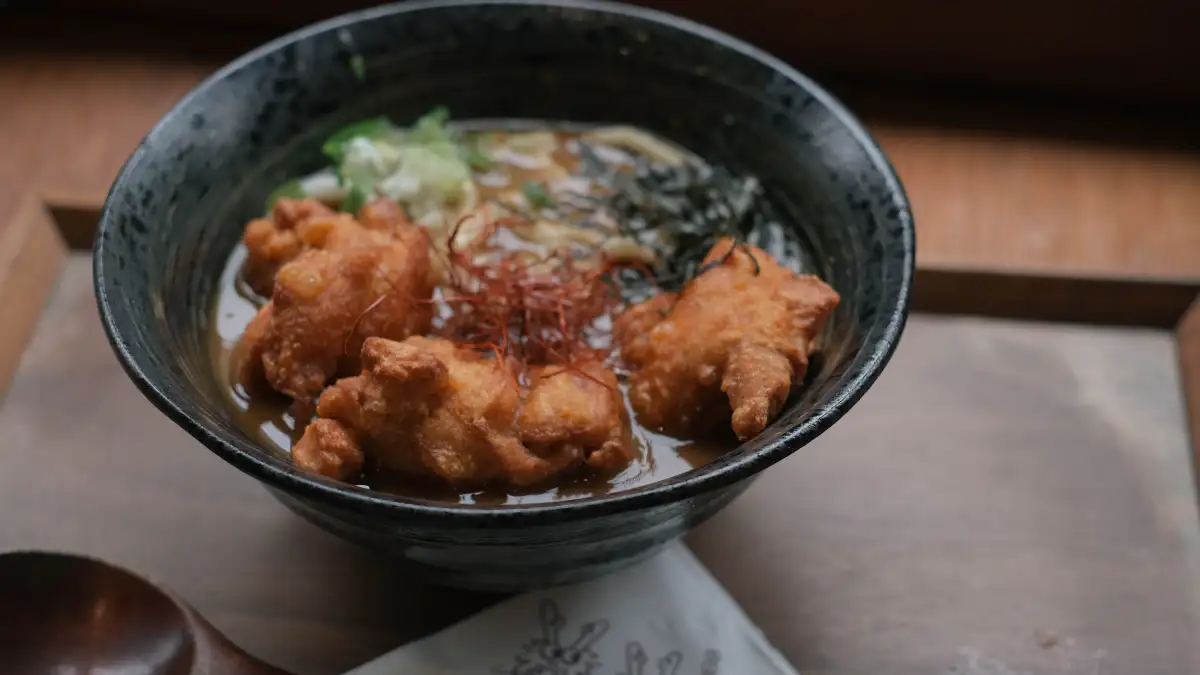
By the time you reach the rice, the pickles, and the soup that closes the meal, you can see the pattern. Wheat rarely arrives as bread here. It arrives as seasoning — soy sauce, a flour-thickened ankake sauce, a batter, and sometimes a noodle course near the end, since soba is usually cut with wheat even when it is sold as buckwheat. It is not one item on the tray. It is a thread that runs through half of them.
Which is why the useful question isn't "is this gluten-free?" It is "what is the dashi made from, and where does the soy sauce go?" A dashi pulled from kombu and bonito and a dashi pulled from a granulated base are different starting points. So are rice miso and a miso built on barley or wheat. Those are concrete, answerable questions. A category is not.
The format decides the ceiling
Here is the part I wish someone had told me years ago: the meal format sets the ceiling on what a kitchen can do, and no amount of goodwill raises it.
A buffet is the easy end. You walk the line yourself, take plain rice, grilled fish, a piece of fruit, and you have made no request at all. The tradeoff is honesty about the setting — shared tongs, shared trays, dishes whose seasoning you cannot fully see. But nobody has to rewrite a menu for you.
A Japanese breakfast set works almost as well, because the thing is already close: rice, grilled fish, miso soup, nori, pickles. Change the miso, watch the pickles and the rolled omelet, and you are most of the way there. A Western breakfast set is the opposite problem. Bread, pastry, cereal, sausage. Take the wheat out and there is a boiled egg and coffee left standing on the plate. The set was built out of the thing you are avoiding.
Kaiseki is the hardest, and not because the kitchen is unwilling. It is a composition. Each course exists in relation to the others, and the seasoning is applied at the pot, not at the table. So the adjustment does not remove an item — it replaces a course. You do not get the simmered dish with the sauce left off. You get a different dish, something the kitchen can cook cleanly, and it lands on the tray looking like it belongs there. That is the version that actually works, and it is worth expecting it instead of hoping for a subtraction.
What to write, and where to send it
Two things go in the message: the condition, and the ingredient list. "Gluten-free" may not parse as a kitchen instruction. "No wheat, no barley, no rye, no soy sauce, no flour" does, and it survives a translation pass. If you can put the words for wheat and soy sauce on the page alongside the English, the kitchen reads a list instead of a category.
Then say what you would accept. Salt-grilled fish, plain rice, vegetables simmered without soy sauce, fruit. Giving the kitchen something it can say yes to is worth more than describing the problem precisely.
Send it in the booking notes when you reserve, and follow it with a direct message or a phone call to the property a week or two out. If you are on the East Coast, your eight in the evening is their nine or ten the next morning — the hour when the front desk has the arrivals sheet open and the kitchen has not yet started the day's ordering. Say it once more at check-in, and ask them to write it on the kitchen's copy in the same words. Not a paraphrase. The same words.
At the table, and the limits worth naming
When the tray comes, the first course will be the test of your nerve. I ask the same small question each time something new lands: does this one have soy sauce or flour in it? It is a yes-or-no question, it is easy to answer, and it is much easier than asking someone to certify a whole meal.
What a ryokan can honestly promise is what it puts in the dish. What it usually cannot promise is the room around it — one pot of dashi for the whole house, one grill, one set of hands. If that matters to you, that is information, not a failure. It is the argument for choosing a plan without dinner attached, eating in town, or picking a property where the evening meal is a buffet. That is not a ranking of places. It is just format math.
The thing I would want you to carry away is smaller than a rule and more useful than a tip. The request is not a favor you are asking a kind person to grant. It is a piece of information that has to arrive at a station before the train leaves, and the station is the kitchen, not the front desk. Send it early, send it as a list, and pick a meal format that gives the answer room to be yes.