A Pasmo is not a train pass with a chip in it; it is a prepaid wallet that happens to open ticket gates, and the same tap that gets you through a gate will pay a convenience store counter, a vending machine, a station coin locker, and a city bus. That matters because the balance is one pool of money doing two jobs at once, and the card cannot go negative. When the balance is short at a register, the tap simply fails — no overdraft, no partial payment, no signature to fall back on, nothing to argue with.
The Tap Is the Same Tap
I had coins out on the tray before the cashier finished scanning, because in my head the card was still a train thing. The man behind me tapped his, the reader chirped, he picked up his bag and walked. No PIN. No signature. No confirm button to hunt for. That was the entire lesson, and it cost me nothing except a small amount of dignity over the coins.
Watch the reader's little screen while you do it. The amount appears first, then the balance after. Two numbers, about a second. That second number is the only place the transaction is ever written down, which I'll come back to, because it changes how you should behave at the counter.
Short Balance Is a Failure, Not a Debt
There is no credit line inside the card. If the number on it won't cover the purchase, the tap is declined and the transaction ends there. The cashier will look at the reader, look at you, and push the card back across the counter while reaching for a different way to take your money. Nobody charges you a fee for it. Nobody writes anything down. It just doesn't happen.
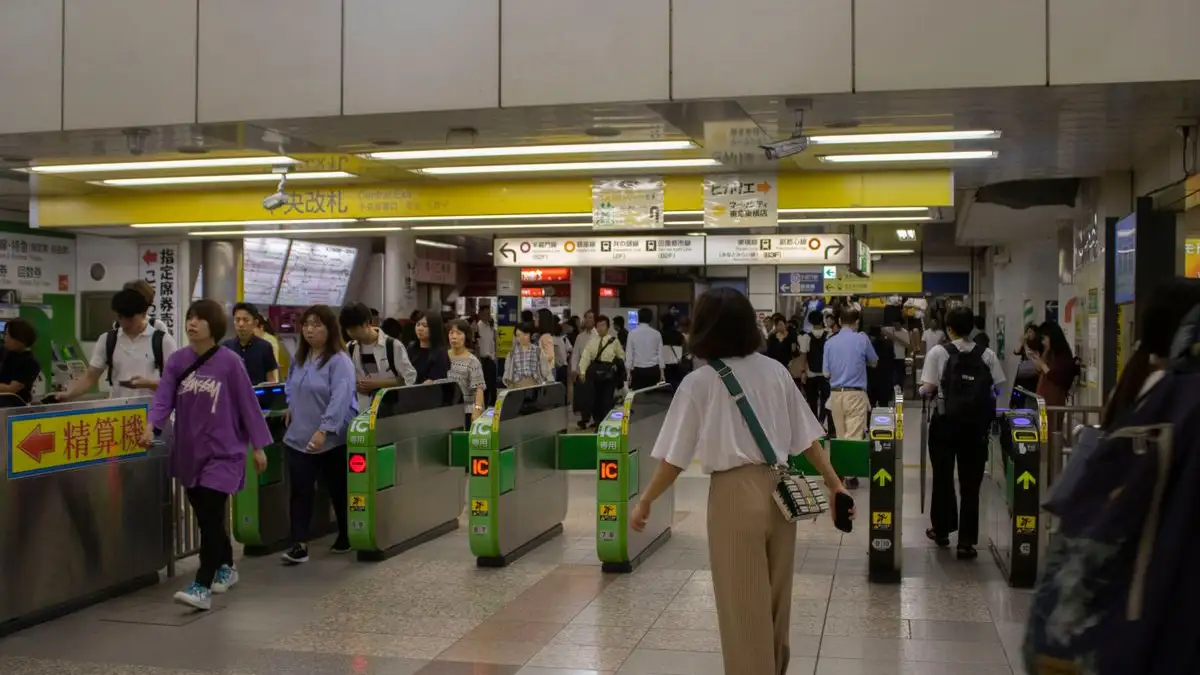
At a shop that's a two-second inconvenience. At a gate it's a different shape of problem, because the flow of people behind you doesn't stop. You step aside, find the fare adjustment machine near the gates, feed the card in, and the machine tells you exactly how much you're short and takes the difference in cash before handing the card back cleared. It works, it's designed for exactly this, and it still costs you five minutes and a little composure at the one moment you wanted to look like you knew what you were doing.
The Locker Is Where the Balance Actually Matters
The luggage locker is the use that catches people, and it's the one where the timing is backwards.
You find a bank of coin lockers with the IC panel on the door. You tap. The door locks. Off you go with your hands free. Here's the part I had to learn twice: in the ones I've used, the meter is running and the charge settles when you come back, not when you walk away. So the balance that mattered when you dropped the bag is not the balance that matters when you collect it. Spend the day drinking your way through vending machines and you can arrive back at your own suitcase with a card that won't release it.
And the locker doesn't know your name. It knows the card. Tap the wrong one of the two IC cards in your pocket and you're standing in front of a metal door explaining yourself to a station attendant who has heard it before. Keep the card you locked with in a separate pocket from any other IC card, so your hand can't make the decision for you.
Buses, Counters, and the Reader That Isn't There
Some bus routes are flat fare and some are distance-based. Watch what the person ahead of you does and copy it. On the distance routes, you tap when you board by the driver and tap again when you get off at the front. On flat routes it's usually one tap. The fare box beside the reader takes coins, so a short balance on a bus is a coin problem rather than a catastrophe — but you're solving it with the driver watching and the whole bus waiting, engine idling.
What tells you a place takes the card is not the sign over the door. It's the pad on the counter with the IC mark on it, or the sticker on the glass by the register. If the pad isn't there, it's cash, and it's cash before you've opened the bottle, not after. Small shops, some restaurant ticket machines, plenty of vending machines, and a good share of taxis are outside the system. Ask the driver before you get in, and you'll get a straight answer.
The Only Record Is the Number on the Screen
Nothing prints. There is no per-tap receipt, no emailed statement, no line items to reconcile at the end of the trip. Whatever the reader shows you in that half second, and whatever the customer-facing screen shows if there is one, is your entire accounting.
So build the habit: glance after every tap. It sounds fussy until the day you can't remember whether you've spent more on drinks than you thought. When you've genuinely lost the thread, the machines at any station will show you the balance, and recharging is the same machine — cash in, number goes up, done.
The reason this matters is the two-jobs problem. Every bottle of tea, every locker, every snack, every taxi ride is drawing down the same number that's supposed to carry you home. Drinks and souvenirs are small and constant; the train is large and at the end. Set a floor in your head, decide it before you leave in the morning, and pay cash for anything that would drop the card below it. That's the whole discipline, and it costs you nothing.
There's an honest trade-off in how much you load. One big load means fewer trips to the recharge machine and a larger stranded balance on your last day. Small loads keep you honest and send you back to the machine more often. I load small, because I'd rather make an extra stop than leave value sitting on a card I'm about to walk away from.
The Last Day Is a Spending Problem
That leftover value doesn't come out of an ATM. You can queue at a station office and close the card out, and that's a counter transaction with a form, which is fine if you have the time and not fine if you don't. The easier exit is to spend it down: a locker, a drink, a snack at any register with a reader. Buy something you were going to buy anyway and let the card do the work it was designed for.
The same logic covers the IC card inside your phone, with one extra failure mode worth knowing about: a dead battery is a dead card, and there's no coin slot for that.