A closed flap and a buzzer at a Tokyo ticket gate almost always mean the card's balance will not cover the fare for the journey just completed, not that the card is broken, blocked, or worthless. The gate is asking for the shortfall before it lets you out. The card is still readable, still valid, and almost certainly reusable — the transaction simply did not clear.
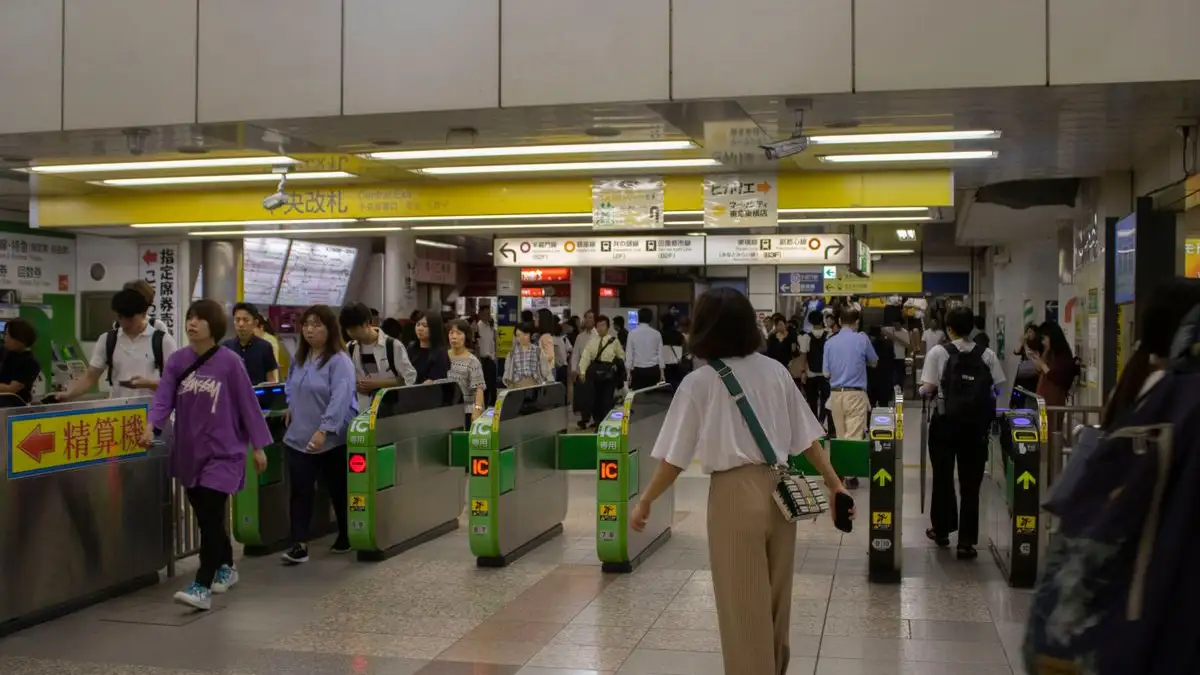
Now put your hand on the reader again. It is 8:40 on a weekday morning, you have just come off a train into a station where the crowd behind you moves like water through a gate line, and you tap. The flap in front of you stays shut and the gate makes a flat, repeating buzz — not the soft chirp of a successful tap, but something lower and more insistent. Everyone behind you adjusts around you without slowing down. Nobody is annoyed, because most of them have done this exact thing at some point.
The first thing I stop myself from doing is tapping again. A second tap on the same reader while the gate is still chewing on the first one is how a small balance problem becomes a locked gate, and a locked gate means standing there until an attendant walks over and resets it. Nothing about that is difficult, but it costs you minutes you did not budget for, and it happens in front of the largest audience you will have all day.
So step to the side of the gate line, out of the stream, and read the gate.
The gate says very little, but it says it twice
Every refusal at a Tokyo gate comes at you in two channels at once — a tone, and a message on the small panel above the reader. The panel is the reliable one. Tones vary between operators and even between gate models, so I have never trusted myself to build a mental table of "this beep means that," and I would be suspicious of anyone who claims to have one. What I trust is the pairing. The sound gets my attention; the panel tells me the story.
Overwhelmingly, the panel is telling you the balance is short. That is the ordinary case, and it is the one worth rehearsing before you travel, because it has a clean solution and it does not require going back to the entrance.
You are still on the paid side of the gates — you have to be, because the flap never opened. Look for the fare adjustment machine. They sit inside the paid area, generally near the exit gates and near the staffed window, and they exist precisely for this situation. You put the card on the reader, the machine shows what is owed, you settle it, and it hands the card back with the balance corrected. Then you return to a gate, tap through cleanly, and the whole thing is behind you.
Some of these machines take cash only, some take cards, and I have never been able to predict which by looking at the front of the machine. There is usually a small sign or a screen prompt that tells you. If it turns out to be cash only and you are carrying none, that is not a crisis either — walk to the staffed window instead. An attendant can take the payment there and let you through without a second trip.
When it is something other than the balance
A handful of other things will make a gate refuse you, and they cluster into two groups: something about how you tapped, and something about the card itself.
The tapping problem is the more common of the two, and it is entirely within your control. The card has to sit flat against the reader and stay there for a beat. Not waved near it. Not tapped on the corner. Not held two inches away and hoped at. And it has to be alone — a Pasmo stacked against a second IC card, or nested in a wallet with a metal layer or a phone case with a magnet in it, will confuse the reader or read the wrong card entirely. If you have ever wondered why the same wallet works at one gate and not the next, that is your answer. It is not random. It is reading distance and interference from whatever is sitting on top of the card.
The card problem is rarer. A card that fails at three different gates in a row — after you have taken it out of the wallet and placed it flat and alone — is probably damaged. That is the point at which the staffed gate stops being optional. Hand the card to the attendant at the window and they can inspect it, and in most cases either resolve it on the spot or issue a replacement or a paper ticket so this one journey still ends properly. Buying a brand new card is almost never the answer, and I would push back on anyone who tells you it is.
The window at the end of the row
There is one in every gate line — the wider gate with a person sitting in a window beside it instead of a row of flaps. Its entire reason for existing is the situation you are currently in. I think of it as the part of the system that assumes something will eventually go wrong for everybody, and it is the only part designed around that assumption.
Walking up to it feels like admitting you failed at something. It is not. The attendant has watched this happen several hundred times this week. You put the card down, they look at their screen, you answer whatever they ask about where you started, they tell you what is owed, and you pay it. If the card is genuinely unreadable, they handle that too. The exchange usually takes well under a minute, and the person behind you in that line is not thinking about you at all — they are rehearsing their own version of the same errand.
The version that catches people on buses
Gates are not the only place this happens, and the bus version catches visitors more often because the rhythm is unfamiliar. On a Tokyo bus with an IC card, you tap when you board and you tap again when you get off. Two taps, two ends of the journey. The tap on the way off is the one people forget, because by then you are thinking about where you are going and not about the machine behind you.
Miss that exit tap and you do not get a free ride. The system charges a default fare, because it has no way of knowing where you actually got off and falls back to an assumption. The next time you tap a gate or a bus reader, you may notice a charge you cannot account for or a balance that looks wrong by an amount you cannot trace. Once you understand that the exit tap is a real transaction and not a courtesy, the habit sticks fast: board, tap, sit, stand, reach back, tap, step down. I say the sequence to myself on the first day of a trip and stop needing to by the second.
The order I actually run in the moment
The sequence I have settled into is short enough to run under pressure.
Stop tapping. Step out of the line of traffic. Look at the panel, not the flap — the panel knows what happened, and the flap only knows the result. If it is the balance, find the fare adjustment machine on the paid side, settle it, and tap back through. If the card is out of the wallet and still failing at gate after gate, go to the staffed window. If the gate has locked because of a double tap or because someone walked through behind you without tapping, that is the one case where you genuinely need an attendant to release it, and the staffed window is again where you end up.
What I keep coming back to is that Tokyo's gates are unusually honest machines. They do not punish you and they do not quietly keep your money. They stop you, they say something specific in two channels, and then they wait — with a person sitting a few steps away whose whole job is to close the loop. A rejected tap is a small administrative event that happens to be taking place in front of a moving crowd. The crowd is the only part that feels large. The event itself is about the size of a receipt.