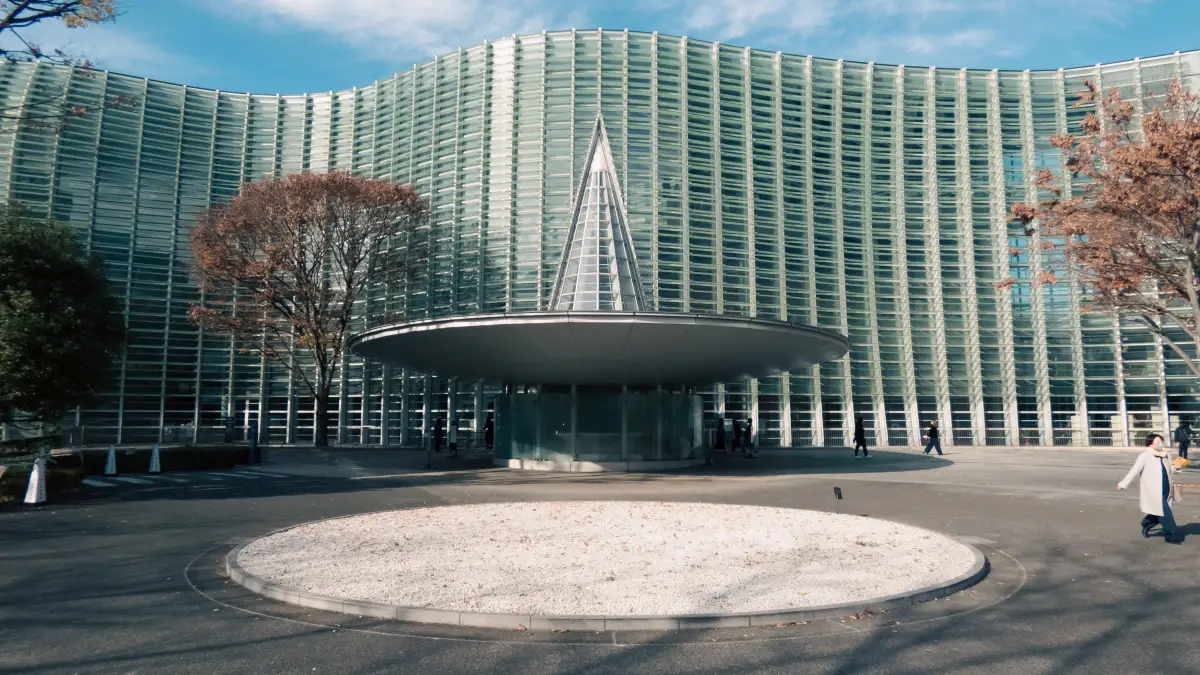
Choose a Tokyo art museum by the medium you want to stand in front of, not by its reputation. Tokyo's art venues sort into a few fixed categories: national collections of classical Japanese and East Asian art, museums built around the Japanese modern century, contemporary art institutions, and single-focus venues for photography, design, or one narrow tradition such as ukiyo-e prints. The category you pick determines how long the route is, how quiet the rooms are, how tightly people cluster, whether the labels will be readable to you, and how much of a half day you will actually spend inside. Reputation tells you none of that.
I want you standing next to me on a bench in a gallery in Ueno on a weekday morning, in front of a pair of six-panel screens behind glass. The light is low enough that the floor has no glare. You can hear a coat sleeve brush against a jacket. A man in a windbreaker comes in, walks the full length of the room in about forty seconds, turns, and leaves. Nothing in that room was going to hold him, and nothing about the museum's name would have told him so before he paid.
That is why I stopped picking museums by ranking years ago. I pick by medium, and I pick by the pace the room is built for.
The first thing I look at is not a painting
I stand still for two minutes and watch how bodies move.
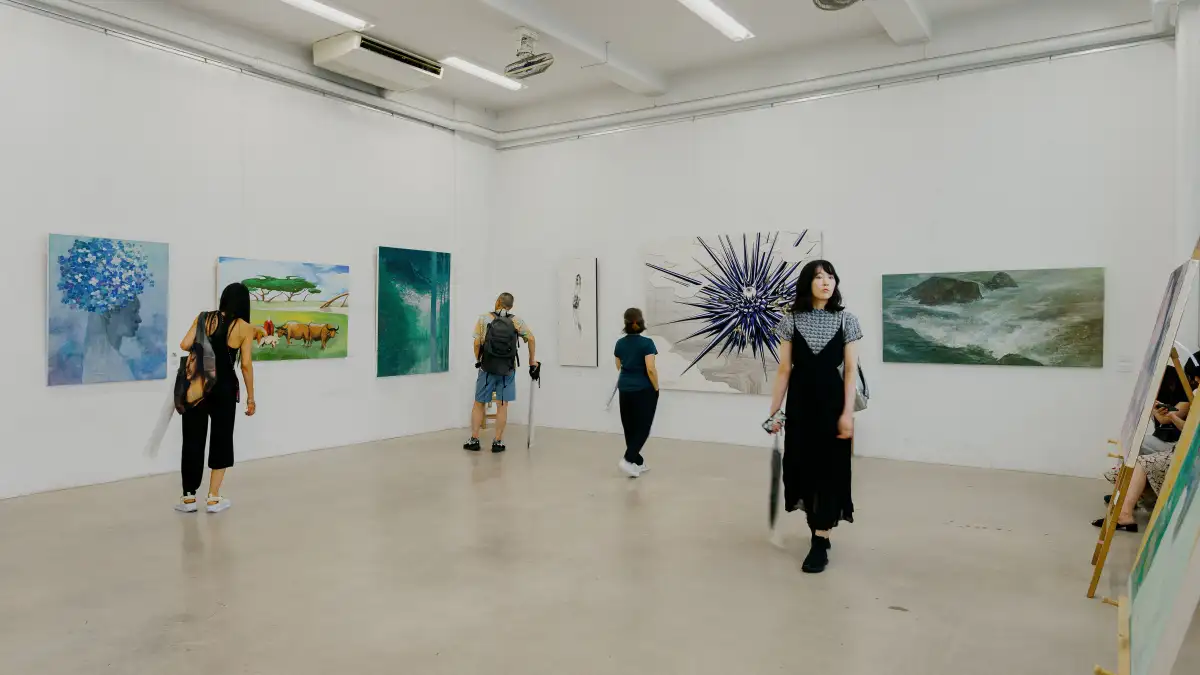
In a classical national collection, people move like they are reading a long book: two steps, stop, two steps, stop. In a contemporary institution, they orbit. They circle a piece, photograph it, and drift to the next one on a curve rather than a line. In a photography museum, the motion is a slow shuffle, because the prints are small and the light is dim and you have to lean in to see the grain.
Three rooms, three different rhythms, three different kinds of tired. If you know which rhythm you enjoy, you already know which building to walk into.
Classical national collections: the long, quiet route
This is the category most people picture when they hear Tokyo art museum. Scrolls, screens, ceramics, lacquer, armor, Buddhist sculpture, sutras, and folding screens with gold leaf. The reference institution is the national museum complex in Ueno, but the same shape shows up in smaller private museums, a collection with a garden and a tea house that holds twenty or thirty objects and nothing else.
What the big ones offer is depth of one tradition across many rooms, and the honest cost is that the route is long. A campus like Ueno's is several buildings. You will not see all of it in a half day, and you should stop trying. Pick one building, walk it properly, leave.
The atmosphere is a hush. Guards stand at the corners of rooms. Cases are lit from above with low spill. Bilingual object labels are the norm on the permanent collection at the national institutions, though special exhibitions are a separate question, and the wall of text is often longer in Japanese.
The small single-subject version is a different trade. A handful of rooms, a garden you can sit in, forty-five minutes, and then you are back on the street. You get one idea, completely. You get no breadth at all, and on a day when you wanted to see many things at once, that will feel like a mistake rather than a relief.
Modern and contemporary: the building behaves differently
A modern Japanese art museum, the kind that anchors the Japanese twentieth century, usually hangs a chronological run. You walk the century in order. That layout rewards walking front to back and punishes wandering, and the rooms are brighter, with benches and more open floor than the classical case galleries.
The crowd is denser than you would expect for the square footage, because these buildings are smaller than a national campus but draw the same weekend volume. People cluster at the famous name and leave the rest of the room empty. If you want quiet, the ends of the chronology tend to be emptier than the middle.
Contemporary institutions work differently again. White cubes, thematic groupings instead of timelines, and a layout that assumes you will spend eight minutes in front of one thing rather than two minutes in front of forty. Photography rules tighten as you move into this category. More rooms prohibit it, and the ones that allow it usually say so at the door rather than on a website.
One fixed mechanic catches almost everyone: at most Japanese museums with a permanent collection, the works rotate. Textiles, prints, and light-sensitive material come off view and go back into storage on a conservation cycle. So the permanent collection is permanent as an institution and shifting as a hang. If you came for one specific screen or one specific print, treat it as a hope, not a plan. The shift is scheduled, it is not a bait-and-switch, and nothing written last year can tell you what is up this month.
The building called a museum that has no collection
This is the trap I would put first if I could only warn you about one thing. Some of Tokyo's best-known art venues have no permanent collection at all. They are exhibition halls. You buy a ticket for whatever is currently installed, and the rest of the building holds nothing.
That is not a flaw. Some of those spaces are gorgeous, and their shows are often the most interesting thing in the city that month. But it changes the shape of your day. You are no longer choosing a collection, you are choosing a specific exhibition, and if the current show does not interest you, the trip is a coin flip.
This category is larger in Tokyo than in most cities. Big art centers, gallery floors inside office towers and department stores, and small independent spaces all sit here. The fixed test is simple: before you build a day around a venue, find out whether it has a standing collection or whether it is a hall. That single question decides whether you are planning a museum visit or buying a ticket to one show.
Photography and design: small rooms, one medium
Single-medium venues are where Tokyo gets quietly excellent, and they are also where people misjudge the time.
A photography museum shows prints in dark rooms built for them. The prints are small, the lighting is low, you lean in and take your time with each frame, and the full circuit is often an hour or less. Design venues read differently: objects, prototypes, posters, typography, arranged like an argument rather than a survey. It is a curated point of view and a good one, and it is also narrow. If your attention is wide, you will finish in fifty minutes and be standing on the sidewalk wondering what is next. If your attention is narrow, you will be inside for two hours and not done.
Labels, audio guides, and what to actually lean on
You can plan a museum day without knowing any current hours, admission, or show titles, and the thing that makes that possible is knowing how the information is structured.
Bilingual labeling at the national museums and the larger modern art museums is standard on permanent collections. Special exhibitions vary, and the English panel is often shorter than the Japanese. Audio guides exist at some venues and not others, and when an English track exists it is frequently a condensed version of the Japanese one. None of that should carry your visit, because a headset is a middle layer between you and the object, and it slows you to the speed of a narrator rather than the speed of your own eye.
The two things that always work: the room panel at the entrance to each gallery, which tells you what the room is arguing, and the two lines on every object label that stay readable even in Japanese. The date and the medium. Date and medium tell you more about what you are looking at than most of the paragraph beside them.
Half a day, measured honestly
Ninety minutes of real looking is a lot. After that, attention drops and you start reading labels instead of seeing objects. So a half day here is roughly thirty minutes of transit, seventy-five to ninety minutes in rooms, and a stop for coffee or a bowl of noodles before you go back out. That is the whole budget.
Two museums in one day does not double your viewing. The second one gets forty distracted minutes and a photo of a wall label you never read again. If the venue is a multi-building campus, one building is the half day. Say that out loud before you go in.
One more fixed structure worth knowing: venues close one weekday, and the closed day is not the same across the city. Two museums you want may both be shut on the same day, and it is not always Monday. Check each venue's closed day rather than assuming, because that single check is what turns a plan into a walk.
How I decide, ten minutes before I leave
I say the medium out loud, not the mood. Not I want to see art, but I want to see Japanese ceramics, or postwar Japanese photography, or mid-century design prototypes. Then I ask whether the venue holds a collection or hosts a show. Then I name the number of rooms I will accept before I stop seeing, and I do not exceed it.
If those three answers line up, I go. If the medium is real but the venue is a hall, I check what is actually installed. If it is not the medium I named, I do not go, no matter how good the building is.
The right museum is the one whose rooms match the way you look. Everything else, the name, the building, the queue at the entrance, is somebody else's reason.